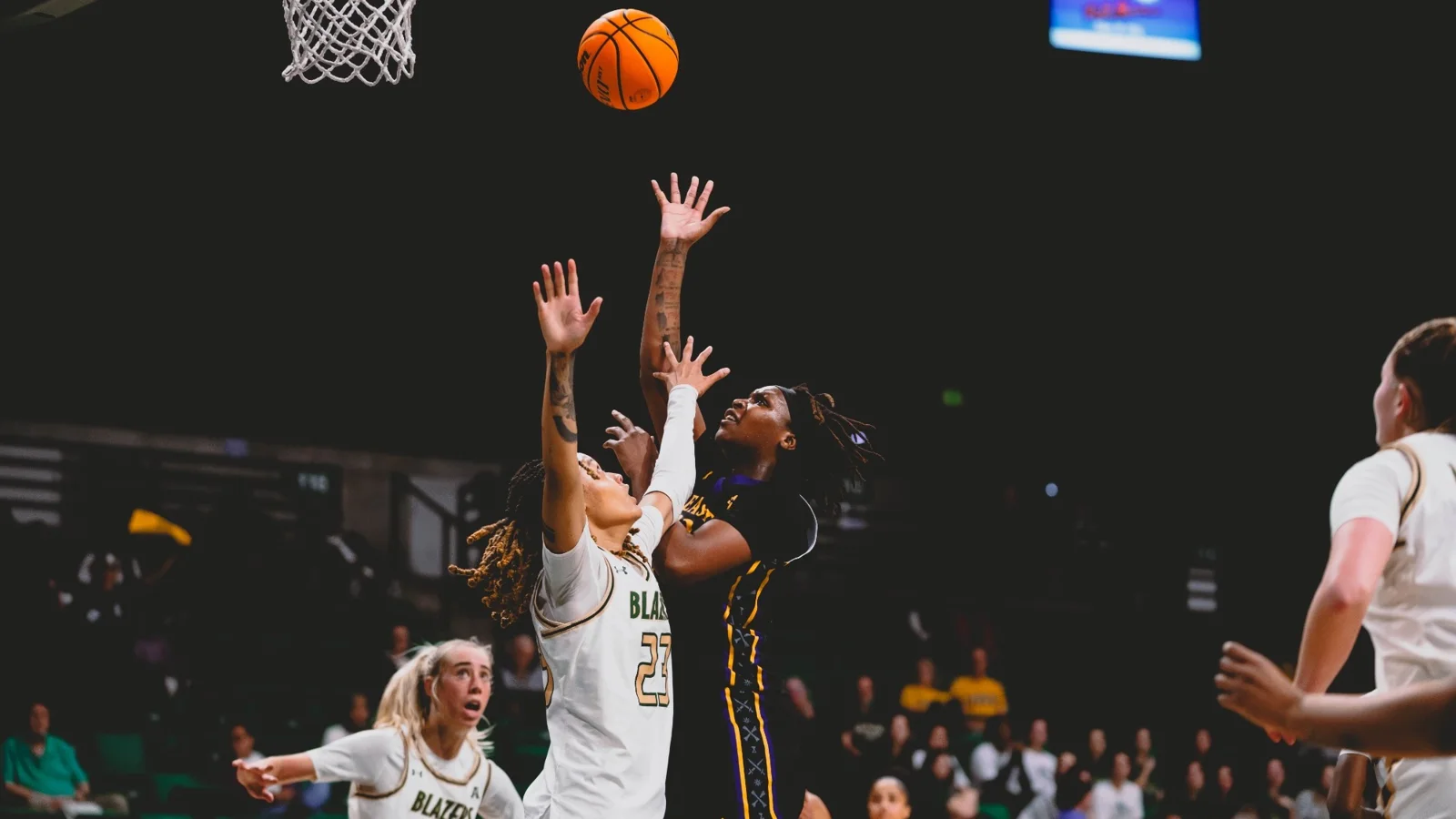
Amiya Joyner is on Louisville's 2026–27 women's basketball roster as a fifth-year forward, and the current explanation is case-specific. The Associated Press reported on October 29 that a favorable Louisiana court ruling allowed Jeff Walz to add her. As of October 30, that supports treating her as available under the reported court relief. It does not establish a permanent fifth season for every player.
For Cardinals fans, two questions belong together: what makes Joyner's present participation possible, and what does her presence add to the team? Her four previous college seasons explain the eligibility dispute; her rebounding record explains why Louisville cares about the answer. Reading the actual court record alongside her playing history gives a more useful picture than either a roster label or an alarming national headline alone.
What Louisville's fifth-year listing actually tells us
Louisville's official biography identifies Joyner as a 6-foot-2 forward wearing No. 12, lists her class as Fifth Year and names LSU as her previous school. That establishes how the Cardinals currently present her place in the program. It is also useful confirmation that a story about her at East Carolina or LSU belongs to an earlier stage of her career.
The class field cannot, by itself, tell you why a player has eligibility. It describes a roster designation, while the reason for participation may depend on an individual history and a particular decision. In Joyner's case, the recent reporting points to court relief. Reading the label as a new universal rule would replace the actual explanation with an assumption.
Four previous playing seasons explain the question
The wider dispute arose during a transition. In its October 29 national report, AP described a five-year, age-based NCAA model due for full implementation in fall 2027. Players from the high school class of 2022 had already completed four college seasons beginning in 2022–23 and were seeking a fifth in 2026–27. That explains the cohort's timing; it is national litigation context, rather than a statement of Joyner's individual court holding or an automatic right for every player.
The chronology is straightforward. Joyner played at East Carolina in 2022–23, 2023–24 and 2024–25, then at LSU in 2025–26. Louisville would therefore be her fifth playing season. The school biography records 34 LSU appearances and 19 starts last season. This is not a situation in which a fan has simply counted a year spent on campus without checking whether she competed.
That distinction is the heart of the question. The phrase fifth year can sound familiar because college rosters contain athletes whose enrollment and playing histories take different paths. Familiar wording does not mean the paths are interchangeable. Before comparing two players, establish what seasons they actually played and what decision currently permits their participation. Matching class labels are a starting point for a question, rather than an answer to it.
Joyner's move also involves two separate ideas that headlines often compress: joining a different school and being allowed another season of competition. The commitment announcement tells fans where she intends to play. The eligibility decision concerns whether she can compete. Completing the first step does not, on its own, resolve the second. Her case is worth following because Louisville's basketball planning rests on the present answer to both.
The site's transfer-portal guide gives broader context for movement between programs. For Joyner's current status, however, the dated court record and the Cardinals' own updates are the more specific evidence. A general description of transferring should not be mistaken for an individualized eligibility decision.
The practical reading for a fan is therefore precise: Louisville lists Joyner with its current team, her official career history contains four previous playing seasons, and the reported basis for the additional opportunity is a favorable court ruling. Each fact answers a different question. Keeping those answers separate makes the story understandable without pretending that a roster page can settle a lawsuit.
The Louisiana court record explains the limits of the answer
There is a real court document that helps explain why availability and final resolution are different questions. An October 2 Louisiana First Circuit order, docket 2026 CW 1297, names Joyner among the parties in Jack Pyburn and others versus the NCAA. The case came from the 19th Judicial District Court in East Baton Rouge Parish, No. 783299. The NCAA was seeking supervisory review.
What the October 2 order decided
The operative outcome is brief: “STAY DENIED; WRIT DENIED.” The court explains that an order concerning a preliminary injunction is not automatically suspended during an appeal and that the NCAA had not shown an abuse of the district court's discretion. That is a procedural ruling about the requested intervention. It supplies a narrower and more reliable account than saying the entire underlying eligibility dispute had ended.
For a basketball fan, the useful way to read that result is to identify the question the document was answering. Was a court being asked to stop an existing order from operating? Was it deciding the eventual merits of every claim? Those are different tasks. Here, the short order addresses the former kind of issue. Its existence helps explain how a player can remain available while a dispute still has a legal life beyond the next game.
Dates therefore deserve attention rather than being treated as decoration on a link. The October 2 document establishes what that court did on that date. The AP's later October 29 reporting supplies the subsequent basketball snapshot, including Walz's plan to use Joyner until told otherwise. Reading the two together supports the current participation story without pretending that the older procedural document independently guarantees the rest of the season.
What it did not decide
This one-page order is not the full underlying trial-court injunction and does not set out all of that order's terms. It should not be used to invent a particular future hearing date, a guaranteed number of games or an unlimited right for other athletes to play. This account also does not describe the case as a final victory on the merits. Those claims would require evidence that goes beyond the document being discussed.
The distinction changes how to read the next headline. If a report says an athlete received court relief, ask who received it and what the relief currently permits. If a report says a request was denied, ask whose request it was. A denial of an opponent's request can be favorable to a player; a denial of the player's own request can mean something very different. The verb alone is not enough to identify the basketball consequence.
It is equally important to keep Joyner's case separate from a lawsuit involving a different Louisville athlete or a player in another state. Sharing a university name does not establish that the same order applies. Neither a men's basketball result nor a football ruling automatically answers the question about this women's roster. The sensible comparison begins with the named player and the actual document, then checks the school's current participation update.
That leaves an answer that is useful without being artificially absolute. Joyner's reported availability has a court-based explanation, and an identified appellate order confirms that her name is part of an ongoing procedural story. What happens next must come from the next relevant decision or team update. A fan can follow the basketball in the meantime without converting that present opportunity into a prediction about the case's eventual outcome.
Why Joyner's availability changes Louisville's basketball options
The court story matters to Louisville because Joyner brings a defined basketball skill. Her recent seasons give a clearer reason to value her than the general idea that an older player automatically makes a roster better. The strongest evidence concerns her work around the basket, particularly the ability to collect misses in more than one team environment.
Rebounding is the most concrete starting point
LSU's 2025–26 biography credits Joyner with 254 rebounds in 34 games, including 100 offensive boards. Those totals translate to approximately 7.5 rebounds and 2.9 offensive rebounds per game: 254 divided by 34 and 100 divided by 34. The offensive number is especially useful because it identifies a way she can help an attack without being the player who creates the initial shot.
An offensive rebound gives a team another chance after an unsuccessful attempt. Depending on where the ball is recovered, the next decision may be an immediate finish or a pass that lets the offense begin again. The value extends beyond the rebounder's own scoring total. A teammate's difficult miss can become another opportunity, while the defense has to remain engaged longer than it expected.
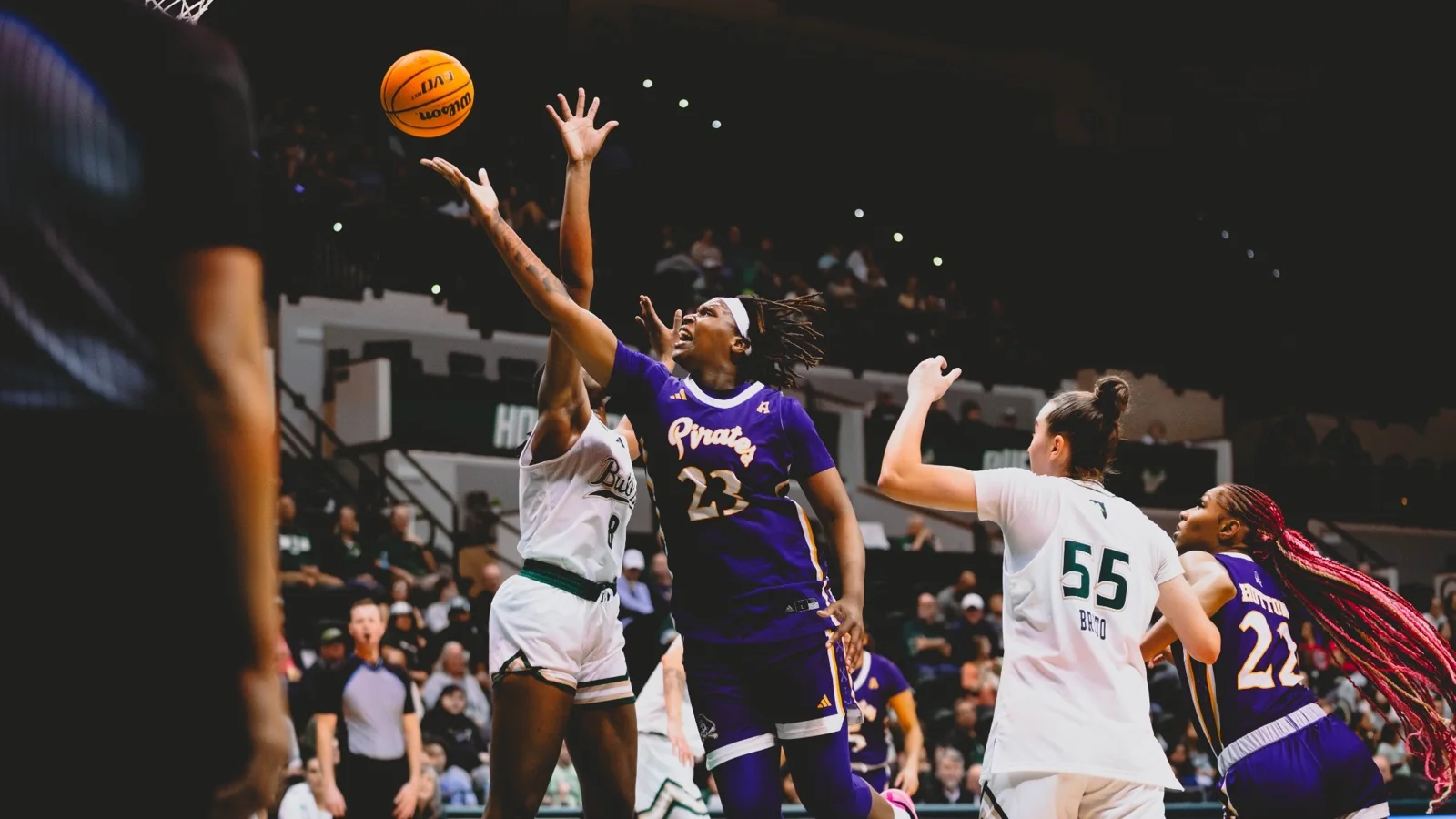
Joyner's work in that area was not limited to one season. East Carolina's 2024–25 statistics record 97 offensive rebounds and 295 total rebounds in 32 games, alongside 15.0 points per game. The team, role and competition changed at LSU, but rebounding remained a substantial part of her production. That history gives Louisville a specific skill to integrate rather than a reputation that depends entirely on one memorable game.
It is still important to distinguish a raw total from a possession-based rate. These figures do not tell us the percentage of every available rebound she collected, or how Louisville's pace and lineup will affect her opportunities. They provide evidence of repeated production. Watching whether she secures the ball in traffic, keeps a play alive or starts the next pass will show how that production translates into her new team's possessions.
Experience adds choices, not a guaranteed lineup
Joyner's scoring history also points toward questions about role. She averaged 15.0 points at East Carolina in 2024–25, while her 314 points in 34 LSU appearances in 2025–26 work out to about 9.2 per game. The difference should prompt a look at responsibilities and opportunities rather than an automatic conclusion that a player improved or declined. A scorer can contribute differently in two attacks, especially when the distribution of touches changes.
The same care applies to shooting efficiency. Making a high proportion of attempts near the basket can be valuable, but it does not by itself tell fans how an offense will create space. To understand the fit, watch where Joyner receives the ball, whether a teammate can cut around that touch and what happens when an opponent brings another defender into the area. Those are relevant questions for a forward entering a new system; they are not claims that a particular Louisville action has already been established.
The current Cardinals roster includes fellow forwards Carys Baker, Elif Istanbulluoglu and Mackenly Randolph. Joyner's presence gives Walz another experienced option among actual teammates. It does not determine which combination starts, who closes or how the minutes divide against every opponent. That depends on the basketball work of the group as well as each player's availability.
For fans, the most revealing comparison will be between lineup functions. Does one combination make it easier to finish defensive possessions? Does another keep offensive rebounds available while giving the guards useful passing targets? Can Louisville change the shape of its frontcourt without losing its purpose? Joyner's record makes those questions interesting because rebounding is a recognizable contribution across different roles.
Her experience can therefore be understood as an added set of choices. The Cardinals can evaluate a forward with substantial college production alongside their returning and incoming players, rather than asking every other option to cover the same jobs for an entire season. That is the practical basketball stake in the eligibility story, even before a regular-season box score establishes what her Louisville role becomes.
How to follow Joyner's status once the season starts
Louisville's official schedule begins with Bellarmine on November 2 at KFC Yum! Center. As of October 30, that opener is still ahead. It is the next point at which fans can connect the team's current roster to an actual regular-season appearance, while continuing to watch for relevant eligibility updates.
A practical habit is to separate three questions: is a player permitted to compete, has the team selected her for this game, and how is the coach using her? An eligibility update addresses the first. A game roster and participation record help answer the second. Minutes, combinations and assignments speak to the third. An answer in one category does not automatically explain the others.
If Joyner does not appear in a particular box score, that absence alone would not establish a court reversal. The appropriate next step would be a dated Louisville explanation or a relevant legal update. Likewise, one appearance would establish that she participated in that game, not prove that every future legal question had disappeared. This approach keeps attention on what has actually changed rather than asking a statistic to reveal the reason behind an absence.
The national numbers also need their date attached. The AP reported NCAA figures from the morning of October 29 showing 62 women's basketball plaintiffs, with 30 having received some form of court relief allowing them to play. That is a count within the litigating group at that moment. It is not a claim that 30 players had won final judgments, or a measure of every fifth-year player in the country.
Those figures explain why a broad national story cannot replace a player-specific update. Different athletes may have different playing histories, claims and operative decisions. When a new report appears, check whether it actually names Joyner and whether it describes a change that affects her current participation. A headline about another case may be relevant context while leaving her situation unchanged.
For the games themselves, the TV schedule helps plan what to watch, and the scores page helps follow results. Check the date and displayed time zone when using either. Then use the official game account to assess Joyner's participation and the basketball around it, including whether her rebounding is changing the number of useful opportunities Louisville gets.
The most meaningful season assessment will combine those possessions across several games. A good rebounding night against one opponent can identify a contribution; repeated work against changing lineups provides a better view of the role. Watch whether Louisville can maintain its defensive possessions, turn recovered misses into organized offense and preserve useful frontcourt combinations as the schedule develops.
Joyner's story is compelling because another college opportunity can have a concrete impact on a team. The current evidence supports watching her as a Cardinals option under the reported court relief. It also supports leaving the eventual legal outcome open. Fans do not need a false promise of certainty to appreciate the basketball she may add right now.
Join the conversation
Share a question or a thought about the women's game. Comments are reviewed before they appear. Keep it friendly, stay on topic and leave out personal information.
No comments yet. Start the conversation.
Sign in with Google to leave a comment. Your email address is not displayed with your comment.