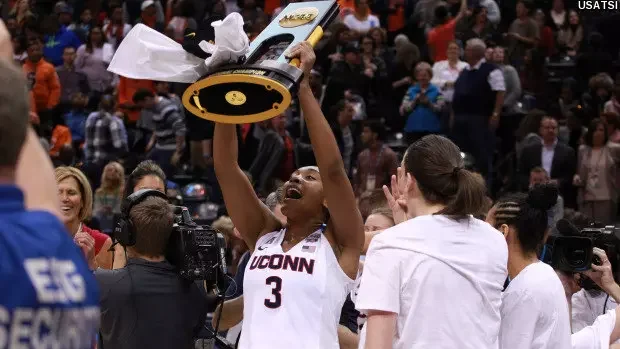
The best women's college basketball teams of all time make different arguments: a perfect record, overwhelming margins, a complete roster or an unforgettable championship performance. This comparison evaluates individual seasons, with NCAA and AIAW championships identified separately.
How to compare the greatest single-season teams
The best women's college basketball teams of all time are best compared as individual seasons, with the roster, opponents and championship run kept together. UConn's 2008-09 team offers an exceptionally strong case through uninterrupted dominance, while the 2001-02 and 2015-16 Huskies, 1997-98 Tennessee, 2011-12 Baylor and 2023-24 South Carolina offer different forms of completeness. This is an editorial comparison, not an official NCAA all-time ranking.
The standard here has four parts: results across the full season, strength of the opponents actually beaten, performance during the championship run and the balance of responsibilities within the roster. The comparison concerns what those college teams accomplished in their own seasons. Later professional success can confirm that a roster contained great talent, but it does not replace evidence of how the players performed together in college.
An undefeated record starts the discussion
A perfect season removes one obvious objection: no opponent actually beat that team. It does not make every unbeaten season identical. UConn finished 39-0 in 2001-02, 40-0 in 2013-14 and 38-0 in 2015-16. Each team won every game available on its own schedule. Treating 40 wins as automatically better than 38 rewards schedule length before examining the quality of the basketball.
Likewise, one loss does not automatically exclude a team from a thoughtful discussion. A demanding schedule or a specific close game can supply context that the final record alone loses. Our selection emphasizes unbeaten championship teams because their completed achievements are unusually persuasive, while recognizing that a shortlist cannot settle every cross-era matchup.
Championship opponents and roster roles add context
The UConn championship archive shows why dynasty labels are insufficient. The 2002 team centered on a different collection of players from the 2009 team, and both differed from the finished Stewart-era team in 2016. A program's cumulative titles do not tell us which particular roster was its best.
A balanced comparison also looks beyond the leading scorer. Guard organization, interior defense, rebounding, shooting and the ability to survive a changed game situation all matter. The championship opponent provides a concrete test of those roles. We can compare an actual title-game performance more responsibly than claiming certainty about an imaginary game between teams separated by decades.
Four UConn seasons with distinct claims to greatness
Grouping all of UConn's champions under one dynasty description loses the differences that make an all-time debate worthwhile. The 2002 starting five, the 2009 combination of guard play and interior dominance, the 2014 roster's size and versatility, and the 2016 team's experienced core each supplied a distinct championship case.
2001-02: a complete starting five
The 2001-02 Huskies finished 39-0 with Sue Bird, Diana Taurasi, Swin Cash, Asjha Jones and Tamika Williams forming an exceptionally complete core. UConn's official anniversary account records national leads in scoring offense, scoring defense, field-goal percentage, rebounding margin and assists. That breadth is a more persuasive argument than the roster's later professional fame.
The team beat Tennessee 79-56 in the national semifinal and Oklahoma 82-70 in the final. Bird's organization and Taurasi's creation gave the offense multiple decision-makers, while the frontcourt supplied scoring and possession control. Those complementary responsibilities are the reason this roster remains a benchmark for balance rather than merely a collection of individually famous players.
Its smallest victory margin was nine points at Virginia Tech. That detail is useful in comparison with 2009: both teams were perfect, but their closest results were different. A fair discussion keeps that distinction without pretending one close regular-season game cancels a season-long case for greatness.
2008-09: a season without a close finish
The 2008-09 Huskies won all 39 games by double figures. That is the central reason they receive the strongest dominance argument in this selection: the team did not merely survive its schedule without a loss; every final margin remained at least 10 points. The opponent's championship report confirms the distinction after UConn beat Louisville 76-54.
Maya Moore, Renee Montgomery and Tina Charles formed the core. Charles' 25 points and 19 rebounds in the final show why the team cannot be summarized as Moore plus supporting players. Louisville had already reached the championship through its own impressive tournament run. UConn's interior production and guard organization gave the final a concrete basketball explanation beyond the unbeaten record.
The selection of 2009 as the clearest dominance case is an editorial judgment about completed results. It does not establish that this roster would certainly beat every later champion under a different rule set. Its claim is already powerful without a fictional score from an imaginary matchup.
2013-14: winning the unbeaten championship matchup
UConn entered the 2014 final undefeated and met an undefeated Notre Dame team. The Huskies won 79-58 and finished 40-0. The contemporary championship report records Breanna Stewart's 21 points and Stefanie Dolson's 17 points, 16 rebounds and seven assists.
Dolson's line is particularly revealing. Rebounding ended possessions, scoring punished defensive gaps, and passing helped teammates turn movement into opportunities. Stewart, Bria Hartley and Kaleena Mosqueda-Lewis added different threats around that frontcourt presence. The roster could win through several connected strengths rather than requiring one player to dominate every scoring possession.
The opponent context needs honesty: Notre Dame was missing injured center Natalie Achonwa. That affects how the championship matchup should be interpreted, even though the Irish had earned their place in the final and UConn's 40-0 record remains intact. Acknowledging an important absence makes the comparison more credible than presenting the game as a perfectly controlled test of two full-strength rosters.
2015-16: the finished Stewart-era team
The 2015-16 Huskies finished 38-0, closing with an 82-51 championship win over Syracuse. Stewart supplied 24 points and 10 rebounds, Morgan Tuck scored 19 and Moriah Jefferson scored 13. The official game account describes the team's passing against Syracuse's pressure and its ability to answer the Orange's third-quarter run.
This team's case is the maturity of a group that had already experienced championship pressure together. Stewart's scoring and defense, Jefferson's guard play and Tuck's interior skill gave it several ways to stay functional when the opponent changed the game. The final was not a sequence in which only one Husky mattered.
Its 38 wins should not be downgraded simply because another champion played 40 games. Conversely, the program's fourth consecutive title should not be counted as four championships for this single-season team. The 2016 roster owns one completed perfect season. The preceding three belong to distinct teams that helped build its experience.
Tennessee, Baylor and South Carolina set different standards
A useful all-time discussion must move beyond comparing UConn teams with one another. Tennessee, Baylor and South Carolina each produced a perfect championship season with a distinctive roster structure. The results are verified; their relative places remain a judgment about which form of excellence a reader values most.
1997-98 Tennessee: the three-peat completed
Tennessee finished 39-0 in 1997-98 and beat Louisiana Tech 93-75 in the national championship game. The Lady Vols' official championship history identifies the combined contribution of Chamique Holdsclaw, Tamika Catchings and Semeka Randall: 62 points and 25 rebounds in the final. That is a concrete demonstration of several major contributors arriving at the same championship moment.
Holdsclaw brought experience from the preceding title teams, while freshmen Catchings and Randall added substantial new talent. The balance matters. This was not simply the same group coasting through a third season; the 1998 team integrated new players into a championship standard and finished without a defeat. Pat Summitt's third consecutive NCAA title was the program's sixth overall, but the single-season case rests on the basketball that particular roster produced.
Compared with the UConn entries, Tennessee offers a particularly compelling combination of athletic ability across positions and multiple productive scorers. That description is an interpretation of the roster and documented performance, not a claim that the Lady Vols would automatically dominate every later opponent. Their completed achievement is already enough to secure a prominent place in the debate.
2011-12 Baylor: the first 40-win perfect season
Baylor became the first NCAA Division I basketball team to finish 40-0, closing the 2011-12 season with an 80-61 win over Notre Dame. Baylor's final report records Brittney Griner's 26 points, 13 rebounds and five blocks, along with 19 points from Odyssey Sims.
The final also supplies a team-level detail that helps explain the margin: Baylor won the rebounding comparison 46-27. Griner's presence around the basket mattered at both ends, but Sims' scoring meant the offense had a substantial guard contribution too. The combination gave opponents more than one problem to solve, while the rebounding helped Baylor control which team received the next opportunity.
The 40-win milestone deserves its historical label without being used as a shortcut to an all-time verdict. Baylor's case is stronger when the total is connected to the actual roster, the undefeated schedule and the emphatic championship performance. The season remains a benchmark for a team built around an extraordinary two-way center with elite perimeter support.
2023-24 South Carolina: an unbeaten team rebuilt
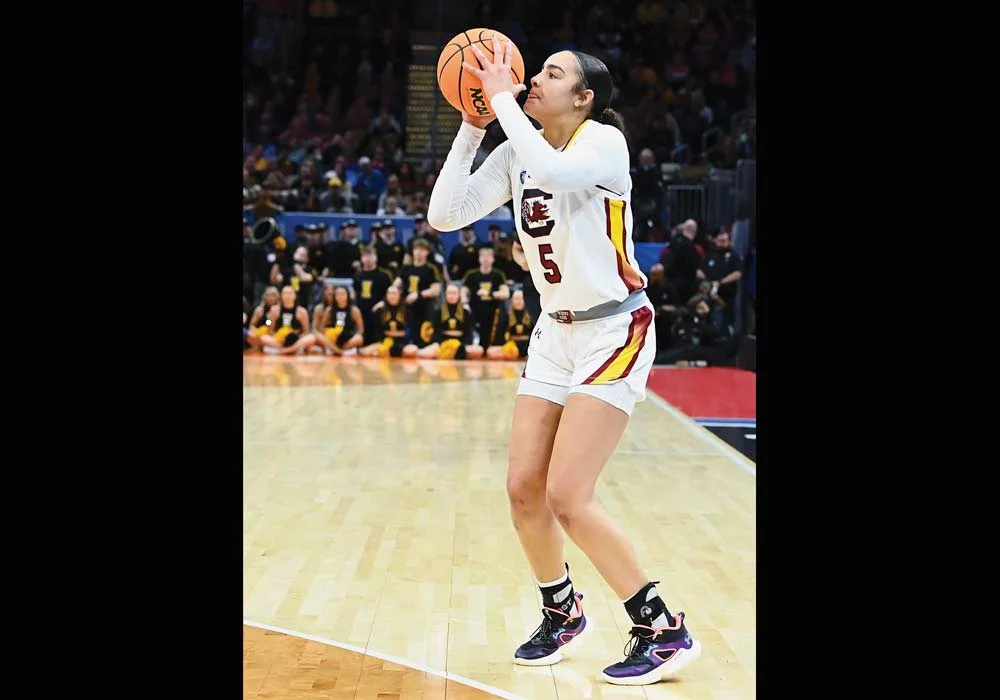
South Carolina's 2023-24 team finished 38-0 and beat Iowa 87-75 in the championship game. The SEC game report records freshman Tessa Johnson's 19 points off the bench and Kamilla Cardoso's 15 points and 17 rebounds. The team had replaced the previous season's five starters, a central part of the university's season retrospective.
The championship case was depth as well as star power. Iowa scored the first 10 points, yet South Carolina had enough productive options to recover and control the game. A freshman reserve leading the scoring while the starting center controlled the boards illustrates the distribution of responsibility. Dawn Staley's team could draw decisive contributions from different places in the rotation.
That makes 2024 a distinctive entry, rather than a generic addition to the list of undefeated champions. The Gamecocks combined a rebuilt lineup with a perfect result and a championship win over the team led by Caitlin Clark. The season's value lies in that complete story: new roles, multiple contributors and an unbeaten finish against the actual opponents on the schedule.
Earlier champions and the teams that keep the debate open
The modern perfect seasons are easier to recall because more fans can revisit them through familiar players and extensive coverage. Earlier champions require the same attention to results and team structure. The point is to compare what each group actually achieved, while keeping the governing body and the season clear.
1985-86 Texas and the first perfect NCAA title run
Texas finished 34-0 in 1985-86, becoming the first undefeated NCAA women's basketball champion. The Longhorns beat USC 97-81 in the final, with five players scoring in double figures. The Texas season retrospective explains the experienced structure behind that result: six seniors, point guard Kamie Ethridge and a freshman newcomer in Clarissa Davis.
The roster's range of contributors matters as much as the pioneering label. A team can survive a difficult matchup because responsibility is distributed, and the five double-figure scorers in the final give that idea a concrete expression. Jody Conradt's team did not need one player to score an extraordinary total to finish the championship game with 97 points.
The preceding season helps explain what the championship resolved. Texas had lost 92-90 to Western Kentucky in the 1985 regional semifinals, with a last-second basket ending a season in which the Longhorns had hoped to reach a Final Four staged on their home floor. The returning group did not receive a championship for the disappointment; it had to produce a new season's results. That connection makes the 1986 record more informative than simply calling it the first perfect finish.
The roster also combined experience with changing responsibilities. The university retrospective notes that senior Gay Hemphill, previously a regular starter, accepted a reserve role. That is a specific example of a talented player contributing within the needs of the team rather than the status of the individual. The example supports discussing depth without inventing a bench efficiency figure or assuming that every successful possession came from the five starters.
The season also included close tests. Perfection was the final result of answering them, not proof that the team faced no pressure. Texas' case belongs near the center of the discussion because the first perfect NCAA championship was accomplished by a complete roster against the opponents of its own era. The fact that it played 34 games should not be mistaken for a weakness when compared with later schedules containing more games.
The AIAW champions need their own historical label
Louisiana Tech's 1980-81 team finished 34-0 and won the AIAW championship, beating Tennessee 79-59 in the title game. The following season, Louisiana Tech finished 35-1 and won the first NCAA championship, beating Cheyney 76-62. The historical championship tables preserve the distinction between those competitions and teams.
It would be inaccurate to describe the 1981 team as an undefeated NCAA champion. It would be equally incomplete to omit it from the broader history of great women's college teams merely because its title belonged to the AIAW. Delta State's championship teams of the mid-1970s and Old Dominion's 1979 and 1980 champions belong in that wider conversation too.
These distinctions are why the selection stays with named seasons instead of turning into a cumulative program ranking. A long dynasty can contain teams with different records, strengths and championship paths. One season should not inherit another team's points, wins or trophies, even if several players and the head coach returned.
Among the seasons examined here, 2009 UConn offers the clearest case through consistent winning margins, 2002 UConn through roster balance, 2016 UConn through an experienced championship core and 2024 South Carolina through depth in a rebuilt team. Baylor's 2012 interior dominance, Tennessee's 1998 combination of contributors and Texas' 1986 completeness remain powerful alternatives. The choice depends on the criteria, while the verified records remain the shared foundation. For the full chronological picture, read the champions-by-year guide; for today's teams, browse the college teams directory.
Join the conversation
Share a question or a thought about the women's game. Comments are reviewed before they appear. Keep it friendly, stay on topic and leave out personal information.
No comments yet. Start the conversation.
Sign in with Google to leave a comment. Your email address is not displayed with your comment.