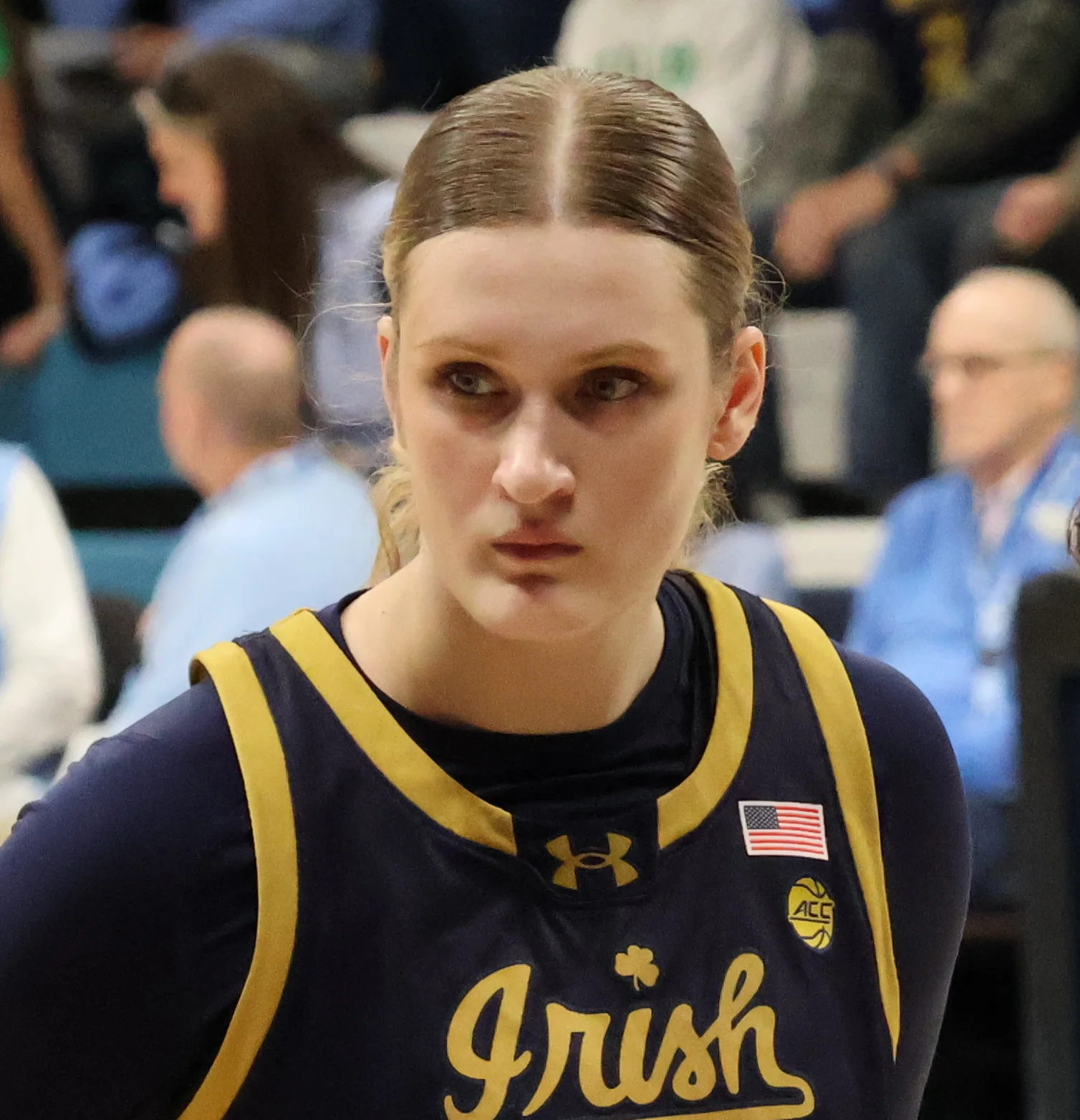
Kate Koval's move from LSU to Baylor became one of the most sensitive women's college basketball stories of 2026. The transaction is clear: an NCAA legislative-relief waiver reportedly let her enter the portal after the normal window, and Baylor added her for 2026-27. The reason requires careful attribution to Koval's own account of how Russia's war against Ukraine affected her personally.
This timeline uses dated LSU and Baylor statements, official statistics and reporting from major outlets. It does not turn private conversations into fact or assign political responsibility to either athlete.
The confirmed answer: Koval is a Baylor Bear for 2026-27
Kate Koval will play for Baylor in the 2026-27 women's basketball season. Baylor announced the signing on September 12, 2026, and lists the 6-foot-5 Kyiv, Ukraine, native as a junior forward wearing No. 13. She arrives after one season at LSU and her freshman year at Notre Dame.
The careful answer to why she left LSU is an attributed one. Koval said publicly that she had not planned to leave, but LSU's addition of Russian player Anna Minaeva after the regular portal window created a situation she could not accept because Russia's war against Ukraine had affected her family, friends and home personally. LSU initially announced that Koval was leaving for “personal reasons” and said it respected her privacy and supported her decision.
What is verified—and what is not
The LSU departure, NCAA relief, portal entry and Baylor signing are reported events. Koval's explanation is her stated experience and deserves accurate attribution. The full waiver file, private conversations inside LSU and every participant's reasoning are not public, so this article does not pretend to reconstruct them.
The NCAA reportedly granted legislative relief because the normal transfer window had closed, allowing Koval to enter the portal and move. That does not mean the NCAA published a general nationality rule or issued a public judgment about either athlete. It resolved Koval's ability to transfer under the circumstances presented. The sections below separate that procedural result from the emotionally charged facts surrounding her decision.
The timeline from LSU departure to Baylor signing
The public sequence lasted less than three weeks, but the dates refer to different actions: an LSU announcement, a reported NCAA decision and a Baylor signing. Keeping those events separate avoids the false impression that Koval entered the portal normally or committed to Baylor the moment she left Baton Rouge.
August 24: LSU announces a departure for personal reasons
LSU published a statement from coach Kim Mulkey on August 24. Mulkey said Koval had spoken with her the day before and would leave the program after much consideration for personal reasons. The statement described the decision as difficult, said Koval loved LSU and emphasized that the program would support her.
At that point, LSU did not publish Koval's detailed reason, name Minaeva or say where Koval would go. That silence matters to the timeline: the initial official record establishes the departure and LSU's response, not the later public explanation or the waiver result.
September 10-11: reported waiver and portal entry
The regular women's basketball transfer window had already closed. Reports on September 11 said the NCAA granted Koval legislative relief that allowed her to enter the portal outside that window. A later LSU Wire report syndicated by Yahoo identifies the decision as occurring Thursday, September 10, and describes her as immediately eligible.
Because the actual order and case file have not been published in the sources reviewed, the narrow formulation is best: the NCAA reportedly approved relief permitting this late portal entry. It is not responsible to invent the exact evidence submitted, the internal vote or a sweeping legal test from short descriptions of a confidential process.
September 12: Baylor announces Koval
Baylor closed the public transaction sequence Saturday morning. Coach Nicki Collen announced Koval's signing and addition to the 2026-27 roster. The school presented basketball reasons for its enthusiasm: scoring around the rim, rim protection, perimeter decision-making and Koval's academic record. It did not use its release to relitigate the LSU controversy.
That restraint creates a clean division of sources. Baylor is the authority for the signing, roster placement and its coach's evaluation. LSU is the authority for its August statement and Koval's 2025-26 school statistics. Koval is the authority for her own experience. News organizations connect the waiver and portal events. No single release, by itself, tells the whole story.
Public sequence: LSU statement (Aug. 24) → reported NCAA relief and portal entry (Sept. 10-11) → Baylor signing (Sept. 12).
What Koval said—and what remains private
“Why” is the most searched part of this story and the part most vulnerable to overstatement. Koval gave a public explanation rooted in her own Ukrainian experience. That is stronger evidence of her reason than fan theories, but it still does not reveal every private conversation or authorize outsiders to assign beliefs to other people.
Her public explanation centered on the war's personal impact
Koval is from Kyiv and came to the United States in 2021. Her Baylor biography also records that she represented Ukraine at youth European championships and the Under-18 3x3 World Cup. Reports by Reuters, ESPN and BBC say Koval explained that Russia's continuing war was not an abstract geopolitical disagreement for her: her father serves in Ukraine's military, people close to her had been harmed, and attacks had damaged places connected to her upbringing and basketball development.
Those reports say Koval had not been planning to leave LSU before she learned the program had added Anna Minaeva, a Russian player with professional experience in Moscow, after the ordinary portal period. Koval framed her reaction around the war's direct personal consequences and her inability to share the situation, not around a scouting comparison or a complaint about minutes.
Responsible wording matters here. Koval's account explains her choice; it does not establish personal responsibility by Minaeva for state actions, and it should not invite harassment of either athlete. Neither nationality nor a roster listing proves a person's politics. Fans can recognize the seriousness of Koval's trauma while refusing to turn another young player into a proxy for a government.
LSU's public statement respected her decision
LSU's August statement did not give the later detail. Mulkey said Koval told her she was leaving after much consideration for personal reasons, described their conversation as long and difficult, and said the program fully supported Koval doing what she believed was right. That public wording is compatible with Koval later choosing to explain more herself: privacy at the time of departure did not prevent the athlete from speaking later.
What remains private is substantial. The public does not have a complete transcript of coach-player conversations, the recruitment process that preceded Minaeva's addition, Koval's waiver submission or the NCAA's findings. It also cannot know what alternatives were discussed inside LSU. Where reports differ in emphasis, the safest synthesis is limited: Koval identified the roster addition as the event that made an already personal war impossible to separate from her team environment; LSU said it supported her departure; the NCAA reportedly provided procedural relief.
That boundary is not evasive. It is the difference between explaining a verified public story and claiming access to the people involved. Readers should be skeptical of posts that turn the case into proof of a secret institutional agenda, a judgment on all Russian athletes or a guaranteed blueprint for future waivers.
What the NCAA waiver actually changed
Transfer coverage often uses “waiver” as if it were one magic document. Koval's case involved a specific timing obstacle: by late August, the ordinary women's basketball notification period was over. The reported legislative relief allowed her to enter the portal despite that closed window.
It addressed an out-of-window transfer, not the merits of the war
For 2026, the NCAA adopted a 15-day basketball notification window beginning the day after the women's championship game. “Notification” is the key word: it is the period in which a player normally tells her school to place her in the portal. Once properly entered, she may take longer to select and enroll at another school.
Koval had remained at LSU beyond that period and sought to leave after the late roster development she described. Reporting says the NCAA granted legislative relief so she could enter. The available public account does not reproduce the ruling, identify every bylaw considered or announce a general rule for conflicts involving national origin. It certainly does not establish that the NCAA judged the character or politics of Koval, Minaeva or LSU.
The sound precedent language is therefore modest. A highly unusual, documented circumstance reportedly supported relief from a missed notification deadline. Future athletes still need their own factual record and decision; they cannot cite a headline and assume any late change will be approved.
Immediate eligibility and enrollment are separate questions
Four steps can be confused in one sentence: permission to enter the portal, recruitment by another school, athletics eligibility after transfer, and admission/enrollment at the new institution. Reports say Koval's relief led to immediate eligibility, while Baylor officially confirms the signing and places her on its roster. Those sources support the basketball conclusion that she is expected to be available for 2026-27.
1. Notify
Request portal entry in the permitted window or receive relief.
2. Recruit
New schools may communicate after valid portal entry.
3. Certify
Transfer and continuing eligibility requirements are checked.
4. Enroll
The player must satisfy the new school's academic process.
The public should not fill gaps in those administrative files. If Baylor later changes Koval's availability, the new school is the proper source. As of the article date, Baylor's announcement and roster establish the intended 2026-27 role; the reported waiver explains how a move that began after the normal window could proceed.
How Koval fits Baylor on the court
The circumstances made the move national news, but Baylor also added a proven high-major post. Koval has already played 67 college games across Notre Dame and LSU, and her two seasons show a useful pattern: shot-blocking translated immediately, while her offensive workload and rebounding grew as a sophomore.
Rim protection is her clearest proven value
Koval blocked 55 shots as a Notre Dame freshman in 2024-25, the fourth-highest freshman total in program history according to her Baylor biography. She added 43 blocks at LSU, where 1.2 per game placed her among the SEC's leading shot blockers. Those totals across two systems make interior deterrence more than a recruiting projection.
A 6-foot-5 defender can affect Baylor even without recording a block. Her size gives guards a back-line target when they pressure the ball, and it gives the staff another option against post-heavy opponents. That sentence is a basketball projection, not a claim based on unseen Baylor practices. The evidence is Koval's repeat block production and coach Nicki Collen's public description of her as someone who can anchor the defense.
Her LSU production shows offensive growth
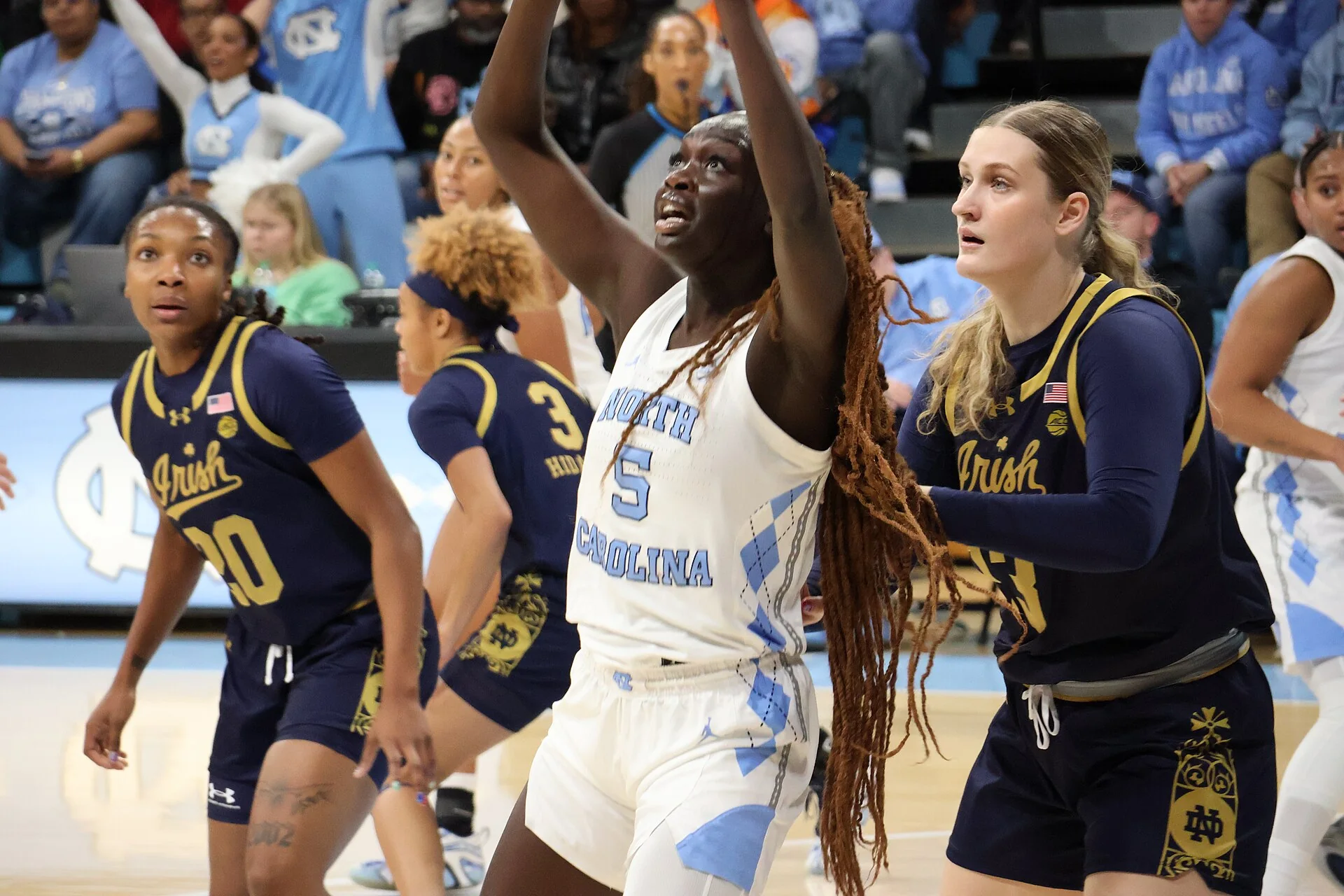
At LSU in 2025-26, Koval appeared in all 35 games and started 17. She averaged 8.3 points and 6.3 rebounds, produced seven double-doubles and scored a career-high 23 against Alabama State. The official LSU season totals list her at 108 made field goals on 193 attempts, a .560 rate, with 219 rebounds and 292 points in 581 minutes.
That is not evidence that Baylor should run its offense through her. It does show efficient finishing on meaningful volume and more scoring responsibility than she carried as a Notre Dame freshman, when she averaged 5.3 points and 4.7 rebounds. Collen also highlighted decision-making from the perimeter. Fans should watch whether Koval becomes a connector from the high post and short roll, but those reads must be evaluated in Baylor games rather than assumed from a signing quote.
Baylor's frontcourt options become more flexible
Baylor already built a defensive identity in 2025-26. Its announcement says the Bears led the Big 12 in blocks per game and three-point field-goal defense and ranked 14th nationally in opponent field-goal percentage. Koval fits that emphasis while adding another true 6-foot-5 body to a roster that also lists Lorena Awou at that height.
The pairing gives Collen choices. One center can protect the rim while the other rests; particular opponents may allow minutes together; smaller lineups can place Koval beside mobile forwards. None of those combinations is guaranteed. What is clear is that Baylor no longer has to make one frontcourt player carry every size matchup.
Koval also joins a team that went 25-9 and extended long streaks of 20-win seasons and NCAA tournament appearances. The Bears are adding her to a functioning program, not asking her to solve an empty roster. Her most realistic immediate value is raising the floor of the defense and rebounding while the staff discovers how much of her developing passing and scoring can be incorporated.
What this case means beyond one roster move
Koval's move exposes the tradeoff built into a short transfer window. A defined period gives teammates and coaches earlier roster clarity, lets schools plan scholarships and encourages academic transitions before summer. Yet an unusual event can arise after the deadline and leave an athlete choosing between remaining in an intolerable personal situation and asking for exceptional relief. A workable system needs both a real deadline and a credible way to evaluate the rare case.
It also shows why waiver transparency is difficult. Publishing every personal document could invade an athlete's privacy; publishing almost nothing makes the result look arbitrary and invites people to invent a test. The NCAA could improve public understanding by describing the category and procedural scope of relief without exposing confidential evidence. Until that happens, one approval should be reported as one approval—not a guaranteed precedent for any player who dislikes a late roster move.
For programs, the lesson is to communicate material roster developments with affected players as early and directly as possible. That does not mean an athlete controls every recruiting decision. It means a team's competitive freedom and a player's personal welfare both deserve a candid conversation, especially when war, family safety or trauma is involved. LSU's public statement supported Koval's choice; Baylor's announcement welcomed her basketball and academic value. Those are important parts of the record alongside the disagreement.
For fans, the standard should be equally disciplined: believe an athlete about her lived experience without converting that experience into permission to target someone else. Separate criticism of policy or communication from attacks based on nationality. Ask what the waiver changed, what remains unpublished and which source confirms each claim.
The next verifiable chapter will be basketball. Koval is on Baylor's 2026-27 roster, and her role can be followed through the site's women's college basketball schedule and score tracker. Performance cannot erase the seriousness of her reason for moving, but it can return the discussion to what she chose next: continuing her education and career in Waco.
The verified takeaway
Koval left LSU, received reported relief to transfer after the window, and signed with Baylor. Her explanation belongs to her; the full NCAA file and internal discussions remain private. Baylor now gains a productive 6-foot-5 junior whose shot blocking and efficient interior scoring already translated at two high-major programs.
Join the conversation
Share a question or a thought about the women's game. Comments are reviewed before they appear. Keep it friendly, stay on topic and leave out personal information.
No comments yet. Start the conversation.
Sign in with Google to leave a comment. Your email address is not displayed with your comment.