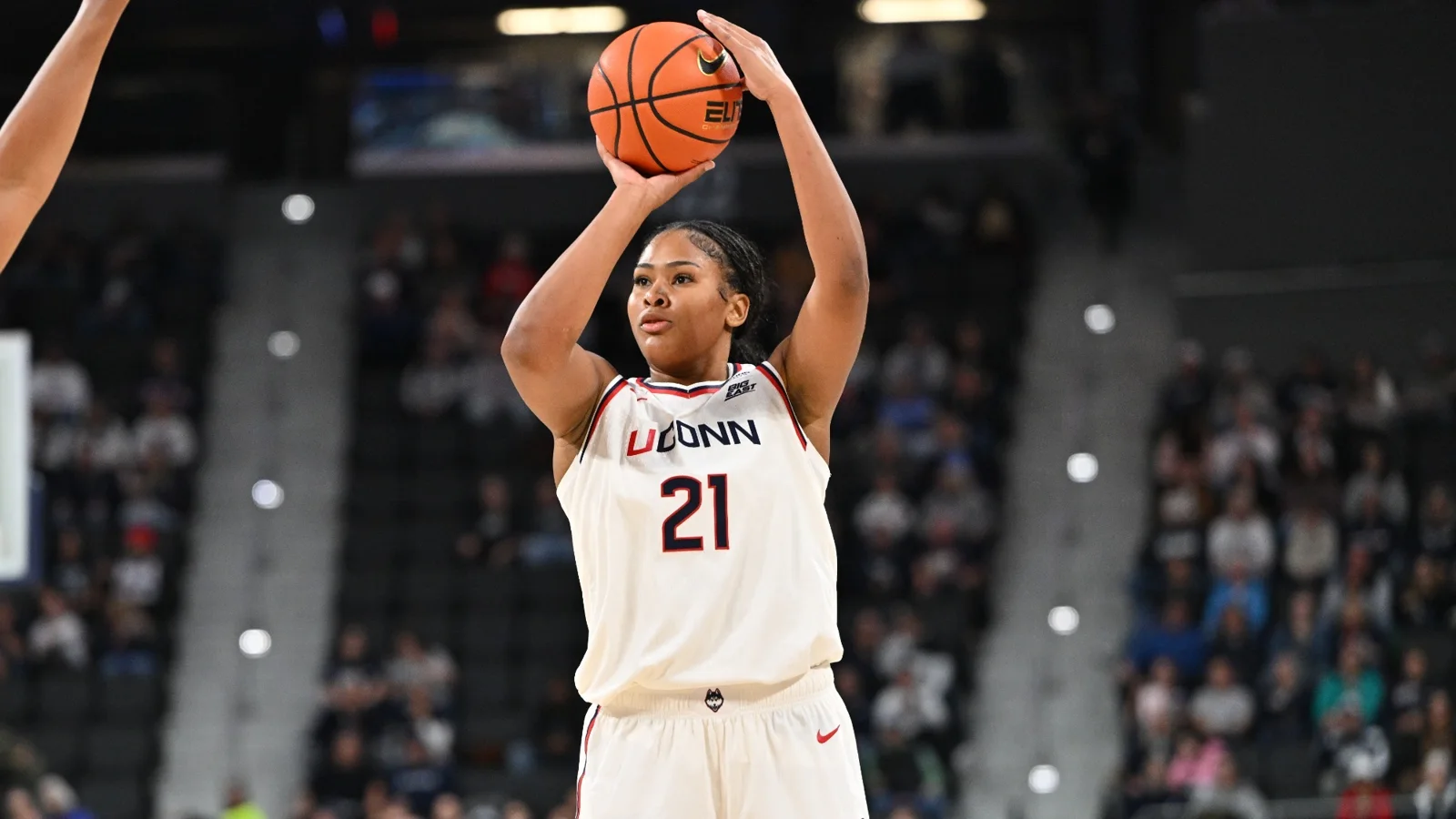
Sponsor patches are appearing on NCAA Division I women’s basketball jerseys in 2026–27 because the NCAA opened new commercial space on uniforms, effective August 1, 2026. The permission does not require every school to sign a deal. UConn’s separate October 2 announcement explains why the Huskies will display UConn Health this season.
The two decisions answer different questions: the NCAA establishes what Division I teams may wear, while the school announces the partner and the scope of its agreement. The national policy and UConn’s announcement should therefore be read together.
For fans, the patch raises reasonable questions about tradition, visibility and money. The answers need more precision than “college jerseys now have ads.” There are size and location limits, differences between regular-season and championship competition, and a distinction between a team’s sponsorship inventory and an individual player’s name, image and likeness agreement. This guide reflects information checked through October 30, 2026.
The new permission began with Division I policy
The NCAA Division I Cabinet approved the commercial-patch proposal on January 23, 2026, with an August 1 effective date. Its announcement covers additional commercial branding in non-NCAA championship competition. The decision creates room for schools to develop sponsorships; it does not select one national sponsor that every women’s basketball program must wear.
That distinction explains the staggered appearance of deals. A permission can begin in August while a school announces its own agreement in October. The second announcement is not evidence that the NCAA changed the rules again that week. It shows an institution using space that the new policy made available. UConn Health is one school’s identified partner, not the name of the overall NCAA program.
Division I is an essential part of the answer. The women’s basketball October 14 corrections expressly distinguish the Division I exception from Divisions II and III. Fans following several levels should not treat a photograph from one division as evidence of what another may wear. The team directory helps establish which program you are following before comparing its uniforms.
The word “additional” matters, too. College uniforms already carry identifying school marks and may display an apparel manufacturer’s mark under its own rules. A new sponsor patch is a separate category of branding. Counting every mark visible on a jersey and concluding that the team has exceeded its sponsor allowance would mix school identity, manufacturing identification and commercial sponsorship together.
For a fan comparing this season with an older photograph, begin with the date and division, then identify the type of logo. A familiar school wordmark remaining across the chest does not mean the uniform lacks advertising; a small new partner mark can occupy an allowed location alongside it. Conversely, a uniform without such a patch does not prove a school has missed a deadline. The policy permits this commercial choice rather than making it a condition of competing.
What UConn actually announced with UConn Health
UConn announced on October 2 that UConn Health branding would appear on its men’s and women’s basketball uniforms beginning with 2026–27. The school’s statement specifies home, away and neutral-site games during the preseason and regular season. Those are useful details: this is not described as a single exhibition-night activation or a mark reserved for one venue.
The announcement also places the uniform within a larger agreement involving digital and social media, group licensing opportunities and community health initiatives. That makes the jersey one visible part of the partnership. A fan watching a close-up sees a compact mark, while the announced relationship includes activities beyond the fabric itself. It would be misleading to assign the entire commercial value of a broad agreement to the patch alone, even if an overall figure were available.
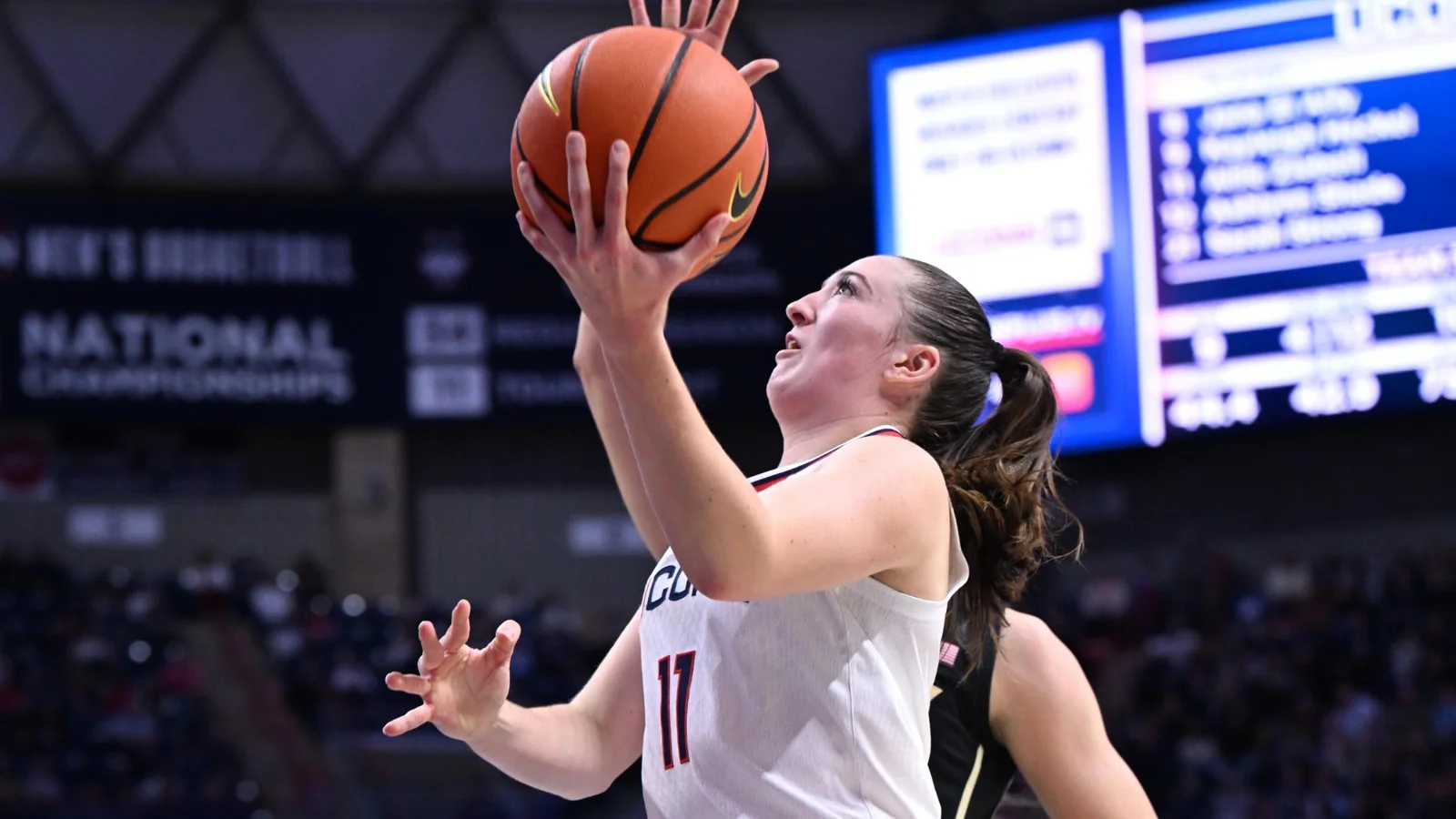
A longstanding relationship now appears on the uniform
UConn Health already served as the athletics department’s primary medical care provider, and the university describes a relationship extending across decades. The new element is the basketball uniform branding and the announced expansion. A familiar university-related name can therefore be a sponsor even when it does not resemble the outside consumer brands fans may have expected.
That connection should not be stretched into an unsupported financial explanation. Recognizing the shared UConn identity does not reveal the agreement’s price, accounting treatment or allocation between the men’s and women’s programs. Nor does the partnership announcement establish an individual player’s compensation or any particular medical outcome. Those questions require their own information rather than an inference from the sponsor’s name.
Be precise when another UConn sponsorship appears in the news. The school’s October 29 Aetna announcement concerns women’s Olympic sports. It is a separate announcement; its existence is not evidence that the basketball program replaced UConn Health days before opening week. Read the named teams and sports before carrying a headline from one program into another.
The current UConn women’s roster guide identifies the basketball group fans will follow this season. The patch explains one aspect of what those players wear. It does not rename the team, identify a different competition, or tell us who will start. Keeping the commercial announcement separate from roster analysis makes both subjects easier to understand.
How big the logos can be, and where they can go
The commercial exception comes with a visible footprint. The NCAA’s October 14 women’s rules corrections limit each commercial or nonprofit logo to four square inches and specify permitted locations. That is an area limit, not a statement that every patch can extend four inches in both directions. A two-inch-by-two-inch square already occupies four square inches.
Two logos does not mean two on every garment
The October 12 explanatory memorandum clarifies that the two allowed commercial or nonprofit logos do not have to appear on the same uniform or apparel item. Think about the allowance across the outfit rather than automatically granting two new sponsor spaces every time another garment is added.
This matters when looking at a close-up of a jersey and then a wider shot showing shorts or supplemental apparel. The camera may reveal a permitted mark that was simply out of frame earlier. It does not follow that each visible garment carries a separate unlimited commercial inventory. Nor should a school wordmark or the manufacturer’s own mark automatically be counted as another sponsor patch under this exception.
The women’s rules protect identifying names and numbers
On the jersey, the corrected rule places a commercial or nonprofit logo on the front shoulder panel, at least one inch away from the identifying name, nickname or logo, or on the reverse side at least two inches above or below the number. On shorts, the location is the front lower quadrant. Those restrictions preserve separation from the identifiers officials and viewers need to read.
The measurements explain why the commercial mark is a patch rather than a replacement for the entire jersey identity. They also explain why a design approved for a different sport is not a complete guide to women’s basketball placement. The Cabinet established the broader policy; the sport’s playing rules determine how the additional branding fits around the basketball uniform’s required information.
A television image is useful for recognizing the partner, but it is a poor ruler. Fabric stretches, players turn, and perspective changes apparent distances. It is reasonable to notice that a mark appears unusually close to a number; it is less reasonable to declare a dimensional violation from an angled broadcast freeze-frame. The published placement rule is the right comparison, and an actual compliance conclusion requires more than a visual impression.
The regular season and March Madness have different permissions
Do not extend a regular-season announcement automatically into the NCAA tournament. The January Cabinet decision concerns non-NCAA championship competition, and UConn’s October statement explicitly names the preseason and regular season. Those descriptions establish what was announced; they do not promise that the identical set of commercial marks will appear at every later postseason event.
Conference championships form a separate category. The adopted Division I legislation provides an additional commercial or nonprofit mark for conference championship competition and its associated pregame and postgame activities, subject to placement and size restrictions. That is a conference-event provision, not a statement that the NCAA national tournament is simply another regular-season game.
The same legislation makes additional commercial marks at NCAA championships subject to NCAA championship policies. The January announcement described exploration of possible national-championship policies with the NCAA’s corporate marketing and media partners. Exploration is not equivalent to a blanket approval for a school to carry every existing sponsor into March Madness.
There is a second reason for care when counting potential postseason logos. The broader legislation’s conference provision must be read alongside the women’s basketball playing rules and the event’s instructions. The October women’s correction states the sport’s two-logo allowance; it would be premature to turn the broader conference language into a prediction that a particular team will display three jersey patches. A possible commercial opportunity and a confirmed uniform design are different pieces of information.
For fans planning the season, the useful distinction is between the school’s league tournament and the NCAA championship. Our 2027 NCAA tournament schedule guide covers the national event. When uniforms are unveiled for that competition, read its current announcement rather than assuming an October sponsor release answers the question.
This does not mean the absence or appearance of a familiar mark signals a broken agreement. A partnership can define different rights across different competitions. The visible uniform is only the portion permitted and activated for that event. Without an announcement explaining a change, a photograph alone does not tell us whether a contract ended, a rule changed or a different competition’s conditions applied.
A team sponsorship is different from a player’s NIL agreement
A sponsor mark on a school-issued jersey does not reveal an individual athlete’s earnings. The NCAA’s current NIL explanation describes compensation for use of an athlete’s name, image or likeness, such as promotional posts, appearances and endorsements. A school’s uniform sponsorship concerns a different piece of commercial inventory: the space and association available on its team uniform.
The distinction is about the rights involved, rather than a claim that team and individual activities can never be connected. A broad partnership can include several kinds of promotion. A jersey patch can provide team visibility while another element involves athletes in an advertisement or licensed campaign. To understand a particular payment, we would need information about that activity and its agreement, not simply a clear photograph of the patch.
Group licensing is an opportunity, not a published payout
UConn’s October announcement specifically includes group licensing opportunities with student-athletes. That wording establishes a part of the announced relationship. It does not provide a public schedule showing which women’s basketball players participate, what any player receives, or whether payments are equal. Turning the word “opportunities” into a guaranteed roster-wide amount would add information the school did not disclose.
Consider the difference between two hypothetical claims. “The partner appears on the team’s jersey” identifies visible sponsorship. “A named player is paid a stated fee for an appearance” identifies an individual activity and a payment that would need its own evidence. One statement does not automatically prove the other. The same caution applies to social media: a uniform visible in an ordinary game photograph is not enough to reconstruct a separate endorsement contract.
The NCAA framed its policy as a way for Division I members to develop revenue and support financial benefits for athletes. That is the national policy’s rationale. It does not establish that every dollar generated by UConn’s specific agreement goes to the women’s team, or that the men’s and women’s programs receive equal allocations. The public announcement supplies no basis for those calculations.
Fans can ask for more disclosure without filling the gap themselves. Useful questions concern the agreement’s scope, how institutional revenue is used, and which athlete opportunities are subsequently announced. A reported deal at another school cannot answer those questions for UConn. Neither can dividing a rumored total by the number of players on a roster. The resulting figure would look precise while resting on assumptions about both the money and who receives it.
What fans can learn from the patch without guessing
A jersey patch establishes that a name or mark has become part of the team's visible presentation. It does not disclose the price of the agreement, the women's program's share of the revenue or an athlete's payment. Those are reasonable questions, but a broadcast close-up cannot answer them. Read the announcement before turning visibility into a financial conclusion.
Start with the named teams and the competition period. In its October 2 announcement, UConn includes both basketball programs and specifies home, away and neutral-site uniforms during the preseason and regular season. That wording is useful evidence. It does not, by itself, promise identical branding at every postseason event or establish the terms of another school's sponsorship.
Read athlete opportunities separately from the uniform agreement. UConn describes group licensing opportunities, digital and social activity, and community initiatives, but the announcement does not publish an individual payout or a women's basketball allocation. A viewer can accurately describe those announced opportunities while leaving the undisclosed amounts open. There is no need to supply an estimate from an unrelated football deal.
Check which rule applies before comparing photographs across divisions. The women's October 14 correction sheet identifies a Division I exception for commercial or nonprofit marks. A logo appearing on a Division I jersey therefore does not establish that the same permission applies in Division II or III. Nor can screen pixels reliably establish a patch's physical dimensions.
Design preferences are a separate conversation. Fans may like a familiar university partner or prefer less branding near a school name. Either is a personal judgment; a handful of comments cannot establish the opinion of an entire fan base. Evaluate the appearance without converting that preference into an unsupported claim about financial benefit or harm.
A different jersey color can make the same logo more conspicuous. Before calling that a new sponsor deal, compare the partner's name and the school's dated announcement; appearance alone does not establish a new agreement.
Use the women's college basketball TV schedule to follow the team, then keep the basketball in view. A partner's shoulder-panel visibility can explain the uniform's appearance. The players' decisions, defensive possessions and execution explain what happens on the court.
Join the conversation
Share a question or a thought about the women's game. Comments are reviewed before they appear. Keep it friendly, stay on topic and leave out personal information.
No comments yet. Start the conversation.
Sign in with Google to leave a comment. Your email address is not displayed with your comment.