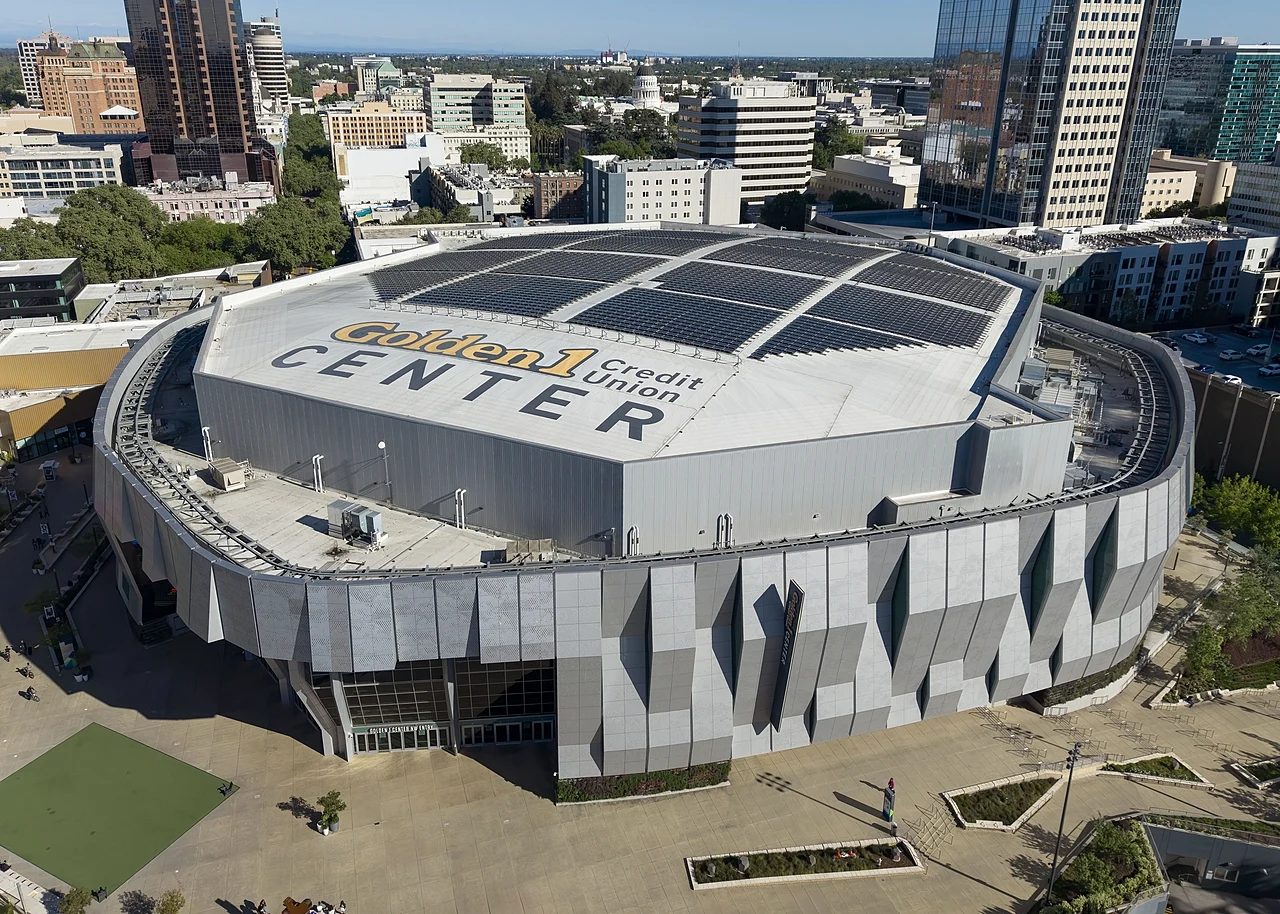
The NCAA women’s tournament now sends the Sweet 16 to two regional cities instead of four. Supporters point to record aggregate attendance and stronger host bids. Critics point to cross-country travel, half-hour shootarounds, uneven-looking crowds and difficult playing conditions. The argument intensified after Geno Auriemma challenged the setup during the 2026 regionals.
This is a format tradeoff, not a referendum on whether women’s basketball should grow. Here is what changed, why the NCAA is keeping it, which objections have evidence and what future tournaments need to measure.
What the two-site regional format actually does
The controversy is about where the Sweet 16 and Elite Eight are played. It is not the same argument as expanding the women’s tournament to 76 teams. Since 2023, the NCAA has placed the four bracket regions into two predetermined arenas. Eight teams travel to each city; each arena hosts two separate regional semifinals and two regional finals across four days.
Under the previous model, four predetermined cities each welcomed four teams and staged one pair of Sweet 16 games plus one Elite Eight game. The current format preserves four regional champions and four Final Four berths. It simply colocates two bracket regions in one building. That is why coaches often call it a “double regional” or “super regional,” although the NCAA’s own description is a two-site, eight-team regional format.
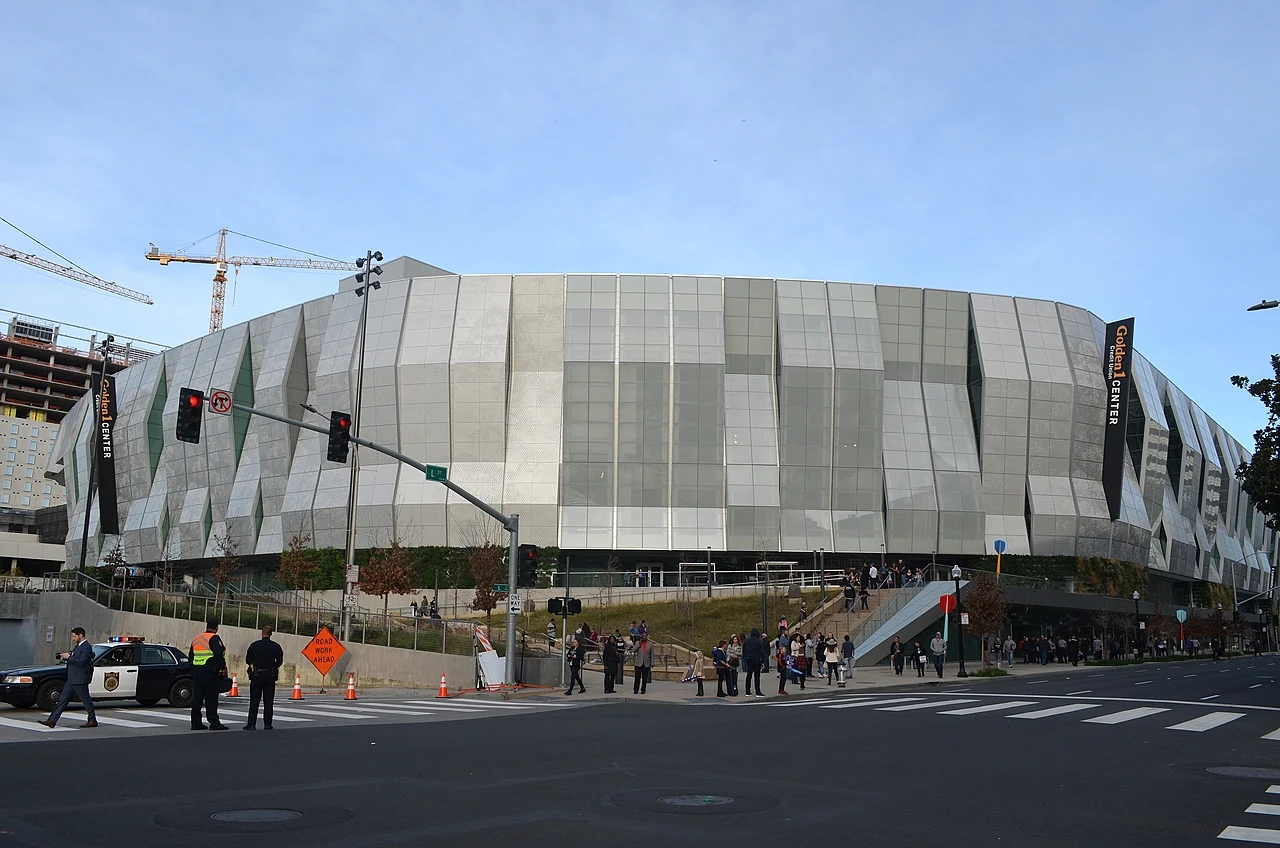
The NCAA announced the shift for 2023, assigning eight teams apiece to Greenville and Seattle. In 2026, the corresponding cities were Fort Worth and Sacramento. The first two rounds still took place at campus sites hosted by top-16 seeds, so teams moved from a familiar on-campus environment to a large neutral arena at the regional stage.
Four bracket regions remain. The change is four regional venues becoming two.
That distinction frames the debate. Supporters see two destination events capable of attracting broader crowds, stronger production and major-city bids. Critics see longer travel, tighter court access and sessions that can feel detached from either team’s home fan base. Both sides are evaluating the same structure but measuring its success differently.
Why the NCAA chose concentration over four separate sites
The format was designed as an event-growth strategy, not merely a bracket convenience. When the women’s basketball committee recommended the change in 2019, it cited the student-athlete experience, stronger broadcast coverage, brand building and programming opportunities. Combining two regions gives one host four days of games, eight fan bases and more inventory to market than a traditional four-team regional.
The attendance and event-building argument
The strongest defense is aggregate attendance. In September 2025, the NCAA reported 84,754 regional attendees for the 2025 tournament, compared with 73,954 for the best total under the four-site model. The association calculated that as a 14.6% increase. It also said cities value the economic impact of hosting eight teams for four days and that larger markets had shown more interest in bidding.
Concentration can make a regional feel like a destination. A neutral fan can see two different bracket regions without changing hotels; broadcasters and event staff build one substantial operation instead of four smaller ones; a host has more sessions to promote. Dawn Staley has argued that gathering seven other teams around hers can pull women’s basketball fans toward one place and help revenue. Those are meaningful benefits in a championship still building its national event culture.
Long-term venue commitments limit a quick reversal
Championship sites are booked years ahead through competitive bids. Philadelphia and Las Vegas were already selected for 2027, with Portland and Washington chosen for 2028. In March 2026, NCAA vice president for women’s basketball Lynn Holzman told ESPN that the two-site plan was committed for at least five more seasons, although a return to four sites remained possible later.
That timeline does not make criticism irrelevant. It means the likely near-term response is operational—better practice allocation, ticket packaging, local marketing or travel planning—rather than abruptly cancelling venue awards. Future host contracts also need the certainty to reserve arena dates, hotel blocks and staffing.
The defense therefore rests on real data and real logistics. Its limitation is equally important: total attendance and host interest measure the event as a whole. They do not automatically prove that every session looks full, every team travels fairly or every player receives adequate court time.
The strongest case against double regionals
The most persuasive criticism is operational, not nostalgic. Moving from four sites to two places more teams, practices, media sessions and fan groups inside the same building. A tournament can post better total attendance while still asking particular teams to travel farther and prepare under tighter conditions.
Cross-country travel and competitive recovery
With only two regional cities, more of the country is inevitably far from a live game. The bracket still has to protect seeds and avoid prohibited rematches, so geography cannot always rescue a distant team. In 2025, UConn was sent to Spokane for a regional that could end Monday night, followed by a trip to a Friday Final Four in Tampa. Auriemma’s complaint was less about the flight itself than the recovery squeezed between the regional final and the biggest weekend of the season.
The burden is uneven. A team placed near its campus may gain a practical crowd and travel advantage; another may cross multiple time zones. Four sites would not eliminate travel, and a poorly located four-site field can still be inconvenient. It would, however, give the committee more geographic landing spots. That matters both for recovery and for fans deciding whether an Elite Eight trip is possible on short notice.
Eight teams competing for one court and practice windows
Court access is the criticism with the clearest documented examples. The Associated Press reported that UConn drew a half-hour game-day shootaround around 6:20 a.m. in Fort Worth. Duke coach Kara Lawson said the regional setup gave teams 30 minutes on the game court when their regular-season shootarounds routinely lasted about an hour.
The building must accommodate games on four straight days, television setup, arena conversion, security, media access and practices for two regional pods. UConn players described morning obligations followed by a return for later practice. UCLA coach Cori Close, initially a supporter of two sites, asked whether the schedule could become more cohesive so teams were not shuttling between media and practice.
That is not proof that an early shootaround determines a result. It is evidence that doubling the teams creates a scarce-court problem. Even Lynn Holzman acknowledged concerns about main-court availability and broadcast windows. A format advertised as improving the athlete experience must measure preparation time, not only ticket scans.
A big arena does not guarantee a full-looking session
On Friday, March 27, 2026, Fort Worth and Sacramento reported 18,821 announced attendees combined, according to AP. That number alone cannot tell us how full either building looked, how many tickets were used or whether the crowd stayed for both games. A session involving a nearby favorite may surge while another feels sparse.
This is where the two sides sometimes talk past each other. The NCAA points to record regional totals and stronger host bids. Coaches and television viewers react to empty seats in a particular session. Both observations can be accurate. Total attendance evaluates the whole event; occupancy and atmosphere need game-by-game or session-by-session denominators.
A fair verdict therefore needs more than a wide camera shot or one annual total. It needs tickets sold and scanned, arena capacity configured for each session, local-team effects and the share of attendees who remain for the second regional. Without that detail, “record crowd” and “half-empty arena” are impressions measured on different scales.
Did the format cause poor shooting?
Poor shooting made the 2026 criticism more visible, but it does not by itself prove the two-site structure caused the misses. The responsible conclusion is narrower: the results were unusual enough to investigate, and the compressed practice schedule gives players less time to adapt to a neutral championship court.
Auriemma’s numbers identify a question, not a cause
Auriemma read six team 3-point lines from the Friday regionals: 4-for-20, 4-for-22, 1-for-17, 5-for-17, 4-for-16 and 7-for-26. In Fort Worth, UConn and North Carolina combined to make 8 of 42 threes. Those lines are concrete and poor. They are not a controlled experiment.
Tournament opponents defend better, fatigue rises, attempts come under greater pressure and a handful of games can cluster at the low end of normal variance. The teams also played in two different arenas. To attribute the misses to the regional format, analysts would need team baselines, shot quality, location, basket end and practice exposure—not only final makes and attempts. Auriemma himself allowed that it might have been a bad shooting day.
Rims, balls and sightlines require controlled evidence
Players and coaches can feel a meaningful difference in a new ball, a firm rim or the depth perception of a large arena. That experience deserves attention. It still should be tested. NCAA regional bid specifications call for hosts to test rim rebound elasticity within the recommended range and keep matching spare backboard-and-rim equipment ready. A claim that a rim was defective needs the inspection data or a documented failure.
A useful review would split shooting by venue, session and basket; compare layups, free throws and uncontested threes; and account for each team’s season profile. It would also log ball pressure, equipment installation, court-access minutes and player feedback before games. If misses concentrate at one end or after especially short warmups, the hypothesis becomes stronger. If they are spread across sites and shot types, defense and variance become more plausible.
This is where the controversy can improve the event even without proving a single cause. Publishing equipment checks and standardized court-access data would replace rumor with evidence. The question is not whether coaches are allowed to notice something; it is whether the tournament can measure what they noticed well enough to act.
Coaches are not united on the answer
The debate is sometimes framed as coaches versus the NCAA, but the coaching side contains important disagreement. Some objections target the two-city concept; others target the schedule built inside it. That difference matters because operational changes may answer the second concern without restoring four venues.
Geno Auriemma’s criticism
Auriemma’s case developed across consecutive tournaments. In 2025, he argued that two western regional sites restricted in-person access for much of the country and described UConn’s early practice windows and potential Monday-to-Friday cross-country turnaround. In 2026, he emphasized poor shooting, modest-looking crowds, limited court time and what he saw as insufficient input from coaches and players.
His strongest point is that athlete experience must be measured at the regional, not assumed from aggregate growth. His weakest leap is causal: a cluster of missed shots cannot establish that the format or equipment produced it. UConn’s success means the criticism is not easily dismissed as an excuse after elimination, but one decorated coach still cannot speak for every program.
Dawn Staley’s defense of concentrated crowds
Staley offered the clearest counterweight in 2025. She acknowledged the difficulty of reasonable shootaround times, yet liked having eight teams and their supporters in one destination. Her argument connects atmosphere to the economic health of the championship: concentrated demand can create bigger crowds and more revenue than four smaller events.
Other coaches occupy the middle. Lawson told AP in 2026 that the city count was not her central objection; she wanted more than a half-hour on the game court. Close, who had supported the shift, called for annual review of efficiency and student-athlete well-being. Those positions suggest that “keep two” and “fix two” can coexist.
All of these coaches want a regional worthy of the sport’s growth. They differ on the best unit of growth. Supporters prioritize one substantial multi-day event; critics prioritize geographic reach and team preparation. A productive review should test both rather than treating either camp as hostile to women’s basketball.
What could change—and what should be measured
The near-term calendar favors continuity. Regional arenas and local organizers need years of lead time, and the NCAA has said the current approach will continue through 2031. Continuity does not require repeating every operational choice. The tournament can preserve two host cities while changing how it schedules court time, media, equipment checks and fan sessions.
The format is booked, but evaluation can improve it
Philadelphia and Las Vegas will host in 2027, followed by Portland and Washington in 2028. The later 2029–31 bid cycle was not yet awarded when Holzman discussed the plan in March 2026. Readers looking for confirmed dates and venues can use our 2027 women’s NCAA tournament schedule and locations guide; the relevant point here is that existing awards make an immediate return to four sites unlikely.
The easier fixes are inside the building. Give teams longer, standardized game-court windows; separate media obligations from late practices; publish equipment-test results; and design tickets that encourage supporters to stay for both regional pods. Build recovery time into the order of games when a regional winner faces a long trip to the Final Four. These are recommendations, not changes the NCAA has announced.
The committee should also report what stakeholder feedback changed. Saying that coaches and athletes were consulted is less useful than identifying the concern, the response and the next measurement. That feedback loop would answer Auriemma’s process criticism without treating one coach as the sole decision-maker.
The questions fans should watch at future regionals
- Crowd: tickets sold and scanned, configured capacity and attendance by session—not only annual totals.
- Travel: distance, time zones, arrival times and recovery before the Final Four.
- Preparation: practice and shootaround minutes on the game court for every team.
- Play: shooting by venue, session and basket compared with team baselines and shot quality.
- Hosting: number and quality of bids, local transport, hotel supply and fan-event plans.
- Experience: structured athlete, coach and fan feedback with year-over-year questions.
Las Vegas and Philadelphia will provide a useful geographic contrast in 2027; Portland and Washington will do the same in 2028. If attendance is strong in both sessions, practice access expands and travel burdens fall, the two-site defense strengthens. If headline totals hide empty sessions and compressed preparation, the case for four regional cities grows.
The format is controversial because both goals are legitimate. Women’s basketball deserves destination events big enough to command attention, and its athletes deserve reasonable preparation while more regions of the country can attend. The best answer will come from transparent comparisons, not from assuming that growth and concentration are always the same thing.
Two-site regionals have produced real gains and real strain. The next step is not choosing a side from one television shot. It is publishing enough session, travel, practice and playing-condition data to determine whether the destination-event model serves both the audience and the athletes.
Join the conversation
Share a question or a thought about the women's game. Comments are reviewed before they appear. Keep it friendly, stay on topic and leave out personal information.
No comments yet. Start the conversation.
Sign in with Google to leave a comment. Your email address is not displayed with your comment.