The women’s NCAA tournament will grow to 76 teams in 2027, only five years after it moved from 64 to 68. The NCAA calls the change a wider championship door backed by new investment. Some coaches see opportunity; others see a commercial decision likely to favor power-conference bubble teams.
Both readings contain evidence. This analysis separates the official case from the objections, follows the likely effects on at-large hopefuls and automatic qualifiers, and sets a practical scorecard for judging whether more March Madness actually improves women’s college basketball.
The short answer: access, money and more inventory
Women’s March Madness is expanding from 68 to 76 teams in 2027 because the NCAA can combine three goals: give eight more programs a championship bid, generate more games for television and sponsors, and distribute more money to schools. Coaches are skeptical because those benefits do not answer the hardest questions—whether the extra at-large places will mostly reward middling power-conference teams, whether the field is already deep enough, and whether the athlete experience improves when the calendar gets busier.
The NCAA’s case is measurable. It says tournament access will rise from 18% to 21% of Division I basketball teams and projects more than $131 million in new distributions over the remaining six years of its broadcast agreements. It also explicitly connects the financial package to newly available sponsorship categories and expanded in-game advertising. Money is therefore not a hidden side effect. It is part of the approved design.
That does not make the access argument empty. Eight additional women’s teams will hear their names called, receive national exposure and play on ESPN networks. For a player who has never reached the NCAA tournament, that opportunity is real. The dispute is about who receives those bids and what kind of game they enter—not whether the invitations exist.
The distinction matters because a policy can create genuine opportunity and still distribute its largest benefits unevenly. Evaluating expansion requires holding both possibilities at once.
The core test: expansion succeeds only if more participation, competitive games and reinvestment outweigh dilution, selection inequity and added commercial clutter.
This article stays with that policy debate. For the dates, host locations and exact bracket flow, use the separate 2027 women’s NCAA tournament schedule and locations guide. Keeping the subjects separate prevents an explanation of the format from becoming evidence that the format is good.
The NCAA’s case for adding eight teams
The pro-expansion argument is stronger than “more March Madness is always better.” It combines a changed Division I landscape, a still-selective championship, new financial capacity and an ESPN platform able to carry every game. Each piece is verifiable; the unresolved question is how fairly the benefits will flow.
A larger Division I needs a wider door
The NCAA says Division I women’s basketball grew from 277 teams in 1985 to 359 in 2026. Meanwhile, the championship held at 64 teams from 1994 until the move to 68 in 2022. A 76-team field therefore expands alongside a much larger sport rather than opening the majority of the division.
The share of teams receiving championship access rises from 18% to 21%. That remains selective compared with a postseason that accepts half the division. The NCAA can reasonably say the door was narrow; critics can reasonably ask whether the best remedy is additional at-large bids or better access for successful teams outside the richest conferences.
New distributions turn extra games into institutional value
The NCAA projects more than $131 million in new distributions to participating schools across the six remaining years of the broadcast agreements. That is a combined basketball-tournament figure, not $131 million earmarked exclusively for women. The organization says the expanded format creates 16 additional women’s basketball fund units and can support scholarships, direct athlete revenue sharing or both.
A tournament appearance can also deliver national recognition, alumni engagement and an enrollment marketing moment. The NCAA will continue covering transportation, lodging, meals and incidentals for tournament teams. Those are legitimate institutional benefits. Still, “available to schools” does not reveal how a particular campus will allocate the money, so athlete investment should later be checked against actual budgets and policies.
More games also create more television and sponsorship inventory
Every game in the women’s championship is scheduled for ESPN networks, giving the added inventory a national distribution path. The financing also opens previously restricted sponsor categories—including beer, wine, spirits and hard seltzer—and permits more in-game advertising. The NCAA says the rights value will increase by an average of $50 million per year over six years.
Commercialization is not merely an accusation from angry fans. In the Associated Press report, NCAA basketball executive Dan Gavitt said expansion would not have happened without the sponsorship agreement. More broadcasts create both more participation and more sellable minutes.
That is the honest NCAA case: the organization found a structure in which access and revenue reinforce each other. Its credibility will depend on whether the dollars measurably strengthen the women’s championship, participating programs and their athletes over time rather than simply making the event longer and more lucrative.
Why coaches are skeptical
Women’s coaches are not one anti-expansion bloc. Some see recognition that can change a program; others see a larger field solving the wrong problem. Their disagreement is useful because it turns a broad argument into three questions: how strong the final invitees are, which conferences collect the added bids and what the earliest-round experience actually gives athletes.
The “deserving team” threshold is already contested
UConn coach Geno Auriemma supplied the sharpest objection. In remarks reported by UConn WBB Weekly, he argued that the 2026 field did not contain 68 deserving teams, much less 76. The Associated Press adds context: only seven of the 32 women’s round-of-64 games in 2026 finished with single-digit margins.
That statistic raises a legitimate quality question, but it cannot settle it. A lopsided loss does not erase a conference champion’s season, and one tournament cannot predict the next class of bubble teams. BYU coach Lee Cummard offers the counterpoint: national visibility can elevate a program and let more athletes’ stories reach viewers. “Deserving” includes competitive strength, yet the NCAA championship also represents access across Division I.
Power-conference bubble teams may capture most new bids
The most consequential fear is not simply that weaker teams enter. It is that committee criteria produce more places for power-conference teams with ordinary league records while strong mid-majors remain outside. A UConn WBB Weekly retrospective estimated that seven of the eight hypothetical additions to the 2026 women’s field would have come from power conferences. That reconstruction is not an official bracket, but it shows why “more access” needs a recipient list.
North Dakota State coach Jory Collins captured the uncertainty in the women’s coach-reaction report: the result depends on what the selection committee does with the extra spots. His program was among the first teams left out in 2026, yet he did not assume expansion automatically solves the mid-major problem.
That concern cannot be answered by reserving the words “at-large” for eight more lines. The committee still compares schedule strength, quality wins, road performance and other résumé evidence. Power leagues create more chances to collect elite wins, while a mid-major may have fewer such games available. Expansion moves the boundary, but it does not remove that structural comparison.
More participation does not guarantee a better athlete experience
An NCAA bid has emotional and institutional value. It also places added teams into the earliest stage, where winners must prepare quickly for another opponent. The NCAA promises travel, lodging, meals and incidentals, but the quality test should include recovery time, campus operations, broadcast presentation and whether players are treated as championship participants rather than schedule filler.
These are forward-looking standards, not claims that the 2027 event has already failed. Collins called the mid-major impact a wait-and-see question; that is the most defensible posture. Coaches have supplied hypotheses. Selection Sunday and the games must supply the evidence.
What expansion means for bubble teams and mid-majors
Expansion creates two different access stories that are easy to blur. The field receives eight more at-large bids, widening the selection line for teams without an automatic berth. Separately, some lower-seeded conference champions receive an earlier, more evenly matched game and an additional opportunity to earn value for their leagues. Those changes do not guarantee the same winners.
Eight more at-large bids move the cut line, not the argument
The official selection guide defines the new field as 32 automatic qualifiers and 44 at-large teams. That creates eight additional committee-selected places. It does not assign those places by conference type, reserve them for regular-season champions or guarantee any mid-major a second bid.
The NCAA’s own history shows why both sides can make a plausible claim. Of the 20 women’s teams publicly identified as the first four out since the 2022 expansion, 13 came from autonomy conferences and seven came from five conferences outside that group. At least one nonautonomy team appeared on the wrong side of the line in every one of those five seasons.
In other words, a 76-team field would have admitted some previously excluded mid-majors—but more of the recent near-misses were power-conference programs. Selection criteria still compare résumés built in unequal scheduling environments. Teams in deep leagues receive repeated chances for high-value wins; excellent teams in one-bid leagues may have fewer. The extra bids move the argument from one set of borderline résumés to the next.
Automatic qualifiers gain a game—but not necessarily an easier path
For six automatic qualifiers—most likely from conferences outside the autonomy group—the redesign guarantees at least two March Madness games and one additional basketball fund unit. The first game should be against a nearby team on the overall seed list rather than an immediate matchup with a top seed. That can mean a winnable national-stage game, a postseason victory and more conference revenue.
It also means those champions must win an added elimination game before reaching the familiar 64-team portion. Calling that only a gift ignores the extra hurdle; calling it only a punishment ignores the more competitive matchup and funded appearance. The value will depend on presentation, recovery conditions and where the unit money goes.
Fan posts have raised both fears: that power teams collect the new at-large bids and that smaller champions carry the longer path. Those posts are useful questions, not polling or proof of consensus. The clean evidence will be the 2027 bid list, conference breakdown, game margins, audience, revenue distribution and results.
Until then, “more access” should always be followed by one question: access for whom?
The quality-and-commercialization test
More games can expand a growing event or stretch its attention too thin. The answer will not come from the number 76 itself. It will come from whether the added women’s games are competitive, easy to find, presented as meaningful championship inventory and followed by visible investment in the sport.
Do the added games produce competitive basketball?
The NCAA expects earlier matchups between teams closer together on the overall ranking to create more competitive games. That is plausible: a lower-seeded conference champion may have a better chance against a peer than against a No. 1 seed. But the promise should be tested with score margins, lead changes, late-game win probability and whether winners remain competitive in their next game.
Close scores are not the only measure of value. The 2026 women’s championship ended 79-51, yet it still drew a major audience. A dominant performance can be compelling, while a close game can be poorly played. The better question is whether the extra round creates credible stakes and memorable performances often enough to justify the added inventory.
Can more ads and inventory grow the women’s event without crowding it?
New sponsor categories and more in-game advertising help finance the expansion. They can fund better production, staffing, travel, athlete services and promotion. They can also create more interruptions or make an early game feel designed primarily to fill commercial windows. The viewer test is not whether sponsors exist; major sports require commercial support. It is whether the presentation protects game flow and treats the women’s championship as a premium product.
Transparency matters here. The NCAA has provided a distribution projection, but fans and programs should later be able to see what improved: stronger broadcasts, more marketing, better on-site services or meaningful school and athlete support. Revenue is an input. Growth is the result that input is supposed to buy.

Women’s March Madness deserves its own evidence
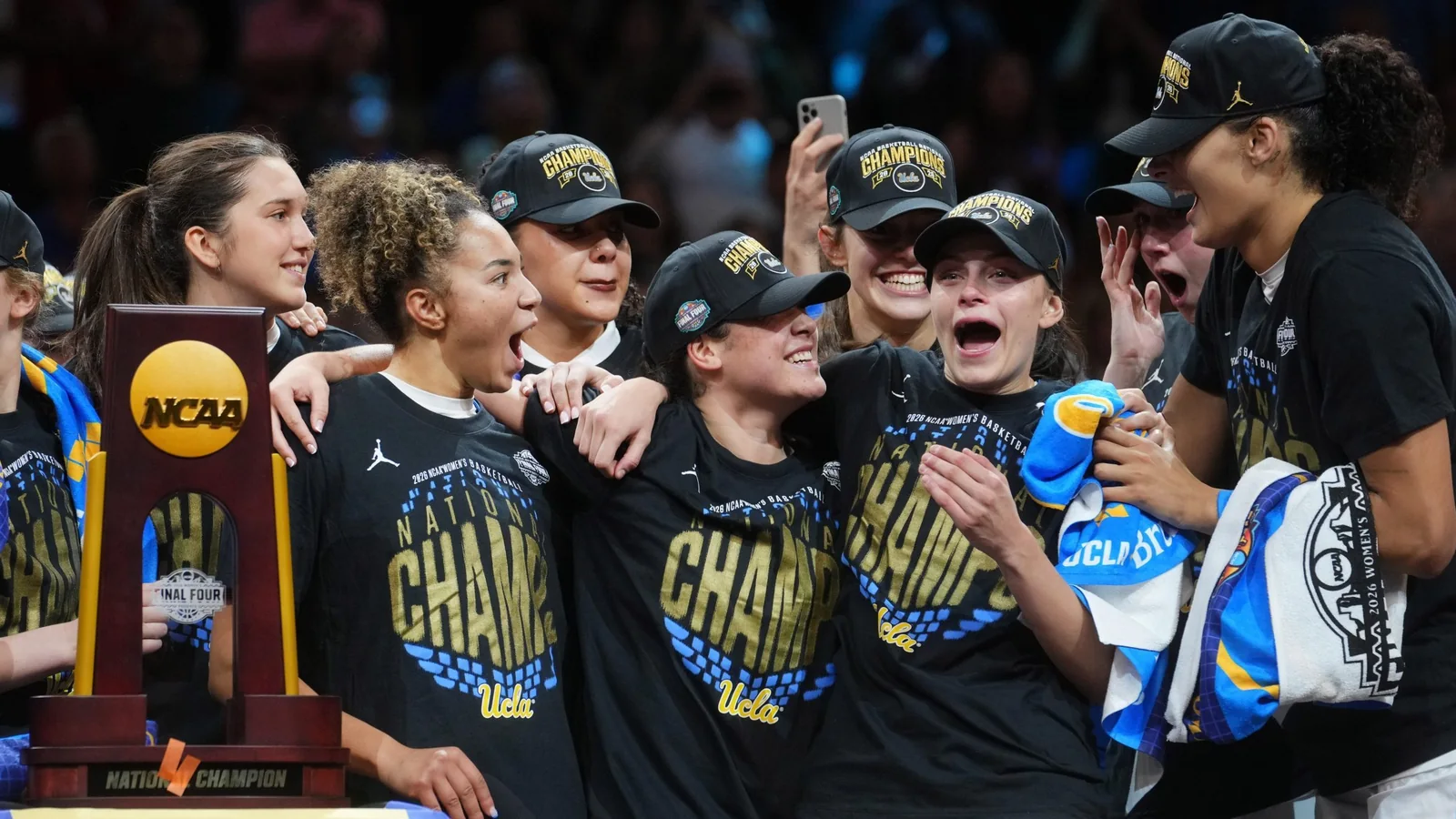
The business case should not assume that men’s viewing habits transfer automatically. ESPN reported that the 58-game 2026 women’s tournament averaged 1.3 million viewers, up 5% year over year. The UCLA–South Carolina final averaged 9.9 million and peaked at 10.7 million despite the large final margin. The women’s event already has substantial demand.
The added games occupy a different time, carry different team recognition and may appear on different ESPN outlets. Their audience should be compared with similar early-round women’s windows, not a men’s tripleheader or the women’s title game. Completion rate and next-round retention may reveal more than a raw average.
If new viewers discover programs and return later, expansion can deepen the audience. If the games are hard to locate, lightly promoted and overloaded with breaks, the NCAA will have created inventory without building durable attachment. That is a women-specific test the 2027 data can answer clearly.
How to judge whether the 76-team field works
Expansion does not need a verdict before the first 76-team women’s bracket exists. It needs a scorecard. The NCAA has made concrete promises about access, competition, investment and exposure; fans can compare those promises with the 2027 record.
Audit who actually receives the eight new bids
Begin on Selection Sunday. List the final eight at-large teams and the first eight left out, then group them by conference type, league record, road wins and résumé quality. Note how many nonautonomy regular-season champions earned at-large access and how many power-conference teams with losing league records entered. One field will not establish a permanent pattern, but it will test the strongest competing predictions.
Do not infer corruption from a conference count alone. The women’s committee selects 44 at-large teams without a conference cap and uses NET, Wins Above Bubble and other evidence. A transparent audit asks whether the chosen résumés withstand comparison; it does not pretend to know each member’s secret-ballot motive.
Selection: Who received the new bids, and how strong were their records?
Competition: Were added games close, credible and worth returning to?
Audience: Did comparable ESPN windows grow and retain viewers?
Investment: What improved for programs and athletes?
Measure the tournament, not the launch messaging
Track score margins, upset chances, broadcast placement and audience against comparable early-round women’s games. Add athlete and coach feedback about recovery, travel and hosting. Then follow the money. The NCAA’s women’s basketball funds distribute money through conference offices without restrictions on its use, so a larger total does not automatically prove larger team-level investment.
Good evidence may produce a mixed verdict: more programs included, some excellent new games, mostly power-conference at-large selections and uneven reinvestment. That is more informative than declaring the format either greedy or visionary.
Repeat the audit across multiple tournaments. A single upset, blowout or rating spike is a story; a recurring distribution and performance pattern is policy evidence.
The 76-team field earns legitimacy if its marginal bids broaden opportunity, its added games feel like championship basketball and its new revenue visibly strengthens the women’s event. If those outcomes do not appear, coaches’ skepticism will have been a warning, not resistance to growth.
Expansion creates real bids, games and revenue. It also creates a burden of proof. The fairest verdict will follow the teams selected, the games played, the audiences reached and the dollars reinvested. Until those results exist, skepticism is not hostility to growth; it is a request that growth benefit the women’s championship on the court as clearly as it does on a balance sheet.
Join the conversation
Share a question or a thought about the women's game. Comments are reviewed before they appear. Keep it friendly, stay on topic and leave out personal information.
No comments yet. Start the conversation.
Sign in with Google to leave a comment. Your email address is not displayed with your comment.